
Published September 10, 2026
Comparing refrigerant prices involves more than finding the lowest number on a product page. Two cylinders that appear similar may differ in refrigerant condition, net weight, packaging, documentation, shipping charges, supplier verification procedures, and return support.
For an HVAC contractor, facility manager, or qualified buyer, these differences can affect the real cost of a repair. An inexpensive cylinder that arrives late, damaged, incorrectly labeled, or unsuitable for the intended equipment can create more expense than it saves.
The most reliable approach is to compare the exact same refrigerant and product condition, calculate the total delivered cost per usable pound, verify the supplier and documentation, and evaluate the financial risk of a problem after delivery.

The Quick Answer
To compare refrigerant prices without sacrificing quality, verify these six points:
- The refrigerant designation matches the equipment specification.
- Both offers describe the same product condition, such as new or properly reclaimed refrigerant.
- The quoted net refrigerant weight is clear.
- Shipping, handling, taxes, and other applicable charges are included in the comparison.
- The cylinder, label, seal, and supporting documentation can be inspected.
- The seller follows applicable refrigerant sales restrictions and provides a clear process for shipping damage or order problems.
Only after normalizing these factors should you decide which offer provides the better value.
Step 1: Compare the Exact Same Refrigerant
Start with the equipment nameplate, manufacturer documentation, or approved service information. A lower-priced refrigerant is not a bargain if it is a different chemical or blend that the system was not designed to use.
For example, R22 and R410A are not interchangeable simply because both have been used in residential air-conditioning systems. They operate with different system designs, pressures, lubricants, components, and service procedures.
The same principle applies to commercial refrigeration blends. A technician should not select an alternative based only on price or pressure. Any retrofit must be evaluated according to equipment requirements, the refrigerant manufacturer’s guidance, component compatibility, lubricant requirements, capacity, temperature glide, and applicable service procedures.
When comparing listings, confirm:
- Exact ASHRAE refrigerant designation
- Intended application
- Refrigerant composition or blend identity
- Cylinder size and stated net contents
- Product condition
- Required valve or connection
- Manufacturer or supplier identification
If a listing uses vague language such as “R22 alternative” without clearly identifying the refrigerant, it should not be treated as equivalent to an R22 listing.
Step 2: Distinguish New, Reclaimed, Recycled, and Recovered Refrigerant
The word “refrigerant” does not describe its condition.
New refrigerant has not previously been used in equipment. Reclaimed refrigerant has been reprocessed and verified to meet the applicable purity specification. Recycled refrigerant has generally been cleaned for reuse through procedures such as oil separation and contaminant reduction, but that does not automatically make it equivalent to reclaimed product. Recovered refrigerant has simply been removed from equipment and stored.
The U.S. Environmental Protection Agency explains that reclaimed refrigerant is reprocessed and verified to meet the applicable specifications based on AHRI Standard 700. The EPA also restricts the sale of used refrigerant for use in another owner’s equipment unless it has been reclaimed by an EPA-certified reclaimer. Review the EPA definitions and reclamation requirements.
Therefore, new and reclaimed refrigerant can both be legitimate purchasing options. The important questions are whether the product condition is clearly disclosed, whether the applicable specification has been met, and whether the seller can provide credible documentation.
For a more detailed comparison, see New vs Reclaimed Refrigerant: Which One Should HVAC Professionals Choose?.
Step 3: Normalize the Cost per Usable Pound
Cylinder prices are difficult to compare when package sizes differ. Calculate the delivered cost per pound using the net refrigerant weight—not the total shipping weight of the cylinder and its contents.
A practical formula is:
Delivered cost per pound = total order cost ÷ stated net refrigerant weight
The total order cost may include:
- Product price
- Freight or shipping
- Handling or hazardous-material charges, when applicable
- Taxes
- Insurance or delivery-related charges
- Discounts that actually apply to the order
If two cylinders contain different net weights, the lower cylinder price may still represent the higher cost per pound.
The following checklist helps normalize competing offers:
| Comparison Point | What to Verify | Why It Matters | Potential Warning Sign |
|---|---|---|---|
| Refrigerant designation | Exact refrigerant required by the equipment | Different refrigerants are not automatically interchangeable | Vague “replacement” or “alternative” wording |
| Product condition | New, reclaimed, recycled, or recovered | Condition affects documentation and permitted use | Condition is omitted or ambiguous |
| Net contents | Refrigerant weight excluding the cylinder | Allows a meaningful cost-per-pound calculation | Only gross shipping weight is shown |
| Delivered cost | Product, freight, handling, tax, and applicable fees | The headline price may exclude substantial costs | Charges remain unclear until late in checkout |
| Cylinder and label | Readable label, intact packaging, suitable valve, and visible condition | Supports identification and safe handling | Damaged valve, missing label, corrosion, or evidence of leakage |
| Documentation | Product identity, safety information, invoice, and condition disclosure | Creates traceability for purchasing and service records | Seller cannot provide basic product information |
| Seller procedures | Certification verification and order records where required | Shows attention to federal sales restrictions | Seller encourages buyers to bypass eligibility requirements |
Step 4: Understand What Refrigerant Quality Means
Packaging appearance alone cannot establish refrigerant purity. A clean cylinder may contain an incorrectly identified product, while properly reclaimed refrigerant may meet recognized purity specifications.
AHRI Standard 700 establishes refrigerant purity specifications and methods of testing. It applies to refrigerant regardless of whether its source is new, reclaimed, or repackaged.
Relevant laboratory checks may evaluate characteristics such as:
- Refrigerant composition
- Water content
- Noncondensable gases
- High-boiling residue
- Acidity
- Chloride
- Volatile impurities, including other refrigerants
The AHRI Refrigerant Testing Laboratory certification program identifies these and other testing categories used to evaluate refrigerant samples.
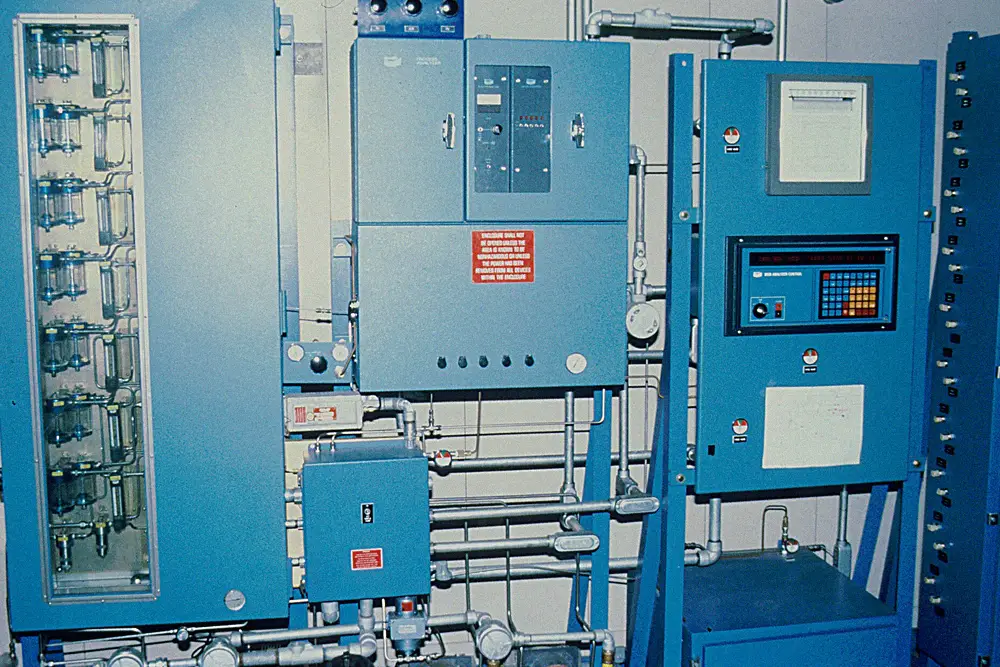
Suggested Filename: refrigerant-quality-laboratory-testing.jpg
A buyer may not receive a laboratory report with every retail cylinder. However, the supplier should clearly identify the product, its condition, and the party responsible for manufacturing, reclaiming, or distributing it. For large commercial orders, buyers may also request available specifications or supporting quality documentation before purchasing.
Step 5: Inspect the Cylinder and Packaging
A factory seal provides useful evidence that the container has not been opened since packaging, but a seal should be considered alongside the label, documentation, seller identity, and physical condition of the cylinder.
Before accepting or using a delivered cylinder, inspect it for:
- A readable refrigerant designation
- Stated net contents
- Manufacturer, reclaimer, or distributor identification
- An intact valve and protective components
- Severe dents, corrosion, or other visible damage
- Evidence of leakage
- Damage to the shipping package
- Consistency between the cylinder label, invoice, and order
Photograph shipping damage before moving or opening the package, and follow the supplier’s claim instructions promptly.
Read Why HVAC Technicians Prefer Factory-Sealed Refrigerant Cylinders for a closer look at packaging, traceability, and jobsite confidence.
Step 6: Verify That the Seller Follows U.S. Sales Restrictions
A seller requesting certification information is not necessarily creating unnecessary friction. It may be complying with federal refrigerant sales restrictions.
The EPA states that the sale of many refrigerants is restricted to appropriately certified technicians, qualifying employers, or authorized representatives. Section 608 certification generally applies to refrigerants intended for stationary refrigeration and air-conditioning equipment. Section 609 certification alone does not authorize the purchase of refrigerant intended for stationary systems. Review the EPA refrigerant sales restrictions.
Online sellers are subject to the same applicable purchaser-verification and recordkeeping requirements as in-person sellers. The EPA provides additional guidance in its questions and answers about refrigerant sales.
A responsible purchasing process should include:
- Correct purchaser or technician information
- Certification verification when required
- An invoice identifying the purchased refrigerant
- Accurate order quantities
- A legitimate business identity and support channel
A seller that promises to bypass required verification should be treated as a risk, even if its advertised price is lower.
Step 7: Calculate the Risk-Adjusted Cost
The lowest delivered cost per pound is not always the lowest total business cost.
Consider what would happen if the shipment were unsuitable or unusable:
- Would the repair appointment have to be rescheduled?
- Could equipment downtime affect a customer’s business?
- Is replacement inventory locally available?
- Does the seller have a clear damage-resolution process?
- Can the product be returned under the applicable policy?
- Is technical or order support available?
- Would the technician need to recover an incorrect charge and repeat the work?
For commercial refrigeration, a delayed repair can threaten temperature-sensitive inventory. For an HVAC contractor, it can add labor, travel, administrative work, and customer-service costs. These expenses may greatly exceed a modest difference between cylinder prices.
A useful comparison therefore includes:
Risk-adjusted cost = delivered purchase cost + probable delay, replacement, and problem-resolution costs
The second part cannot always be calculated precisely. It should still be considered when two suppliers have different documentation, fulfillment, and support standards.
Why Legitimate Refrigerant Prices Differ
Price differences do not automatically indicate a quality problem. Suppliers may quote different prices because of:
- Refrigerant type and current availability
- New versus reclaimed condition
- Cylinder size and net contents
- Manufacturer or supply source
- Packaging and handling requirements
- Transportation distance
- Seasonal demand
- Regional inventory
- Regulatory supply changes
- Customer-service and fulfillment costs
U.S. HFC supply is also affected by the phasedown established under the American Innovation and Manufacturing Act. EPA allowance requirements and scheduled reductions can influence supply planning across the market. Current program information is available through the EPA HFC Allowance Allocation and Reporting resource.
For a more detailed explanation of the market drivers, read Why Refrigerant Prices Are Increasing.
Because prices and availability change, record the date and time of every quote. Offers collected weeks apart may reflect different market conditions.
Refrigerant Price Red Flags
Investigate further when a listing has one or more of these warning signs:
- No exact refrigerant designation
- No stated net refrigerant weight
- Unclear new, reclaimed, recycled, or recovered condition
- A price dramatically below comparable offers without an explanation
- No identifiable seller or business contact information
- No certification-verification process when one is required
- No readable label or representative cylinder information
- Pressure alone presented as proof of compatibility
- No stated process for damaged shipments
- Requests for unusual off-platform payment
- Claims that every refrigerant is a universal replacement
- Guaranteed performance without considering equipment design
A warning sign does not prove that a product is defective. It indicates that the buyer needs more information before ordering.
A Practical Refrigerant Buying Workflow
1. Identify the equipment requirement
Use the equipment nameplate and approved service information to identify the correct refrigerant. Do not diagnose refrigerant problems or select replacements based only on symptoms.
2. Determine the required quantity
Estimate the service quantity using equipment data and qualified diagnostic procedures. Avoid ordering an unsuitable package size merely because its price appears attractive.
3. Compare equivalent offers
Place only like-for-like products on the same comparison sheet. Separate new refrigerant from reclaimed refrigerant unless either condition is acceptable for the intended job.
4. Calculate delivered cost per pound
Include all charges that will apply to the order. Use stated net contents rather than cylinder gross weight.
5. Review the seller and documentation
Confirm seller identity, purchaser-verification procedures, product information, order records, delivery terms, and the applicable return or damage policy.
6. Consider delivery timing
A slightly lower price may not offset a missed service appointment or extended equipment downtime. Compare realistic delivery expectations rather than assuming that every “in stock” label represents the same fulfillment time.
7. Inspect the delivery before use
Compare the cylinder, label, seal, and invoice with the original order. Document damage or inconsistencies immediately.
Once the technical requirement and purchasing eligibility have been confirmed, buyers can use the Freon Shop refrigerant collection to compare available refrigerant categories and package options.
Frequently Asked Questions
Is the cheapest refrigerant safe to buy?
Price alone cannot establish safety, suitability, or quality. Confirm the exact refrigerant, product condition, net weight, cylinder condition, documentation, seller identity, and applicable sales requirements before buying.
Should I compare refrigerant by cylinder price or price per pound?
Use total delivered cost per net pound when cylinder sizes differ. Cylinder price alone can make a smaller package look less expensive even when its cost per pound is higher.
Is reclaimed refrigerant lower quality than new refrigerant?
Not necessarily. Properly reclaimed refrigerant is reprocessed and verified to meet the applicable purity specification based on AHRI Standard 700. Buyers should confirm that the product is genuinely reclaimed and comes through an appropriate supply channel.
Does a factory seal guarantee refrigerant purity?
No single visual feature guarantees purity. A factory seal is a valuable packaging and tamper-evidence indicator, but it should be evaluated together with product identification, documentation, supplier credibility, and cylinder condition.
Can I directly compare the price of R22 and R410A?
You can compare their market costs, but they are different refrigerants used in different system designs. A lower price does not make one an acceptable substitute for the other.
Can homeowners order refrigerant for their own AC repair?
Purchasing eligibility depends on the refrigerant and its intended use. Most refrigerants used in stationary air-conditioning systems are subject to EPA sales restrictions. A homeowner should coordinate with an appropriately certified HVAC professional and verify the current requirements before ordering.
Why do refrigerant prices change so frequently?
Prices can change with supply, demand, season, regulatory allowances, production, imports, transportation costs, and regional inventory. Compare quotes collected within the same period and confirm the final checkout total.
Final Takeaway
The best refrigerant purchase is not simply the cylinder with the lowest advertised price. It is the correct refrigerant, in an appropriate condition and package size, supplied with credible identification and documentation at a competitive total delivered cost.
Compare like with like. Calculate cost per net pound. Verify quality indicators and seller procedures. Account for delivery and problem-resolution risks. That process gives HVAC professionals a much clearer measure of value—and helps prevent a small purchasing discount from becoming an expensive service problem.