

Neither new nor reclaimed refrigerant is automatically the correct choice for every HVAC job.
New refrigerant is often preferred for new-equipment charging, manufacturer-controlled commissioning, warranty-sensitive work, and projects requiring a factory-sealed supply chain. Reclaimed refrigerant can be an appropriate choice for servicing compatible existing equipment, supporting legacy systems, reducing demand for newly produced refrigerant, and meeting certain regulatory or sustainability requirements.
The deciding factors should be:
- The exact refrigerant specified for the equipment
- Whether the job is a new installation or service repair
- Verified refrigerant purity
- Container labeling and supplier documentation
- Original equipment manufacturer requirements
- Customer or project specifications
- Federal and state rules
- Availability and total job cost
Properly reclaimed refrigerant is not simply “used refrigerant in another cylinder.” It must be reprocessed, tested, and verified against applicable purity requirements.
New, Recovered, Recycled, and Reclaimed Are Not the Same
HVAC professionals should distinguish four terms that are often incorrectly used interchangeably.
New or virgin refrigerant
For regulatory purposes, virgin refrigerant means newly produced refrigerant. In ordinary HVAC purchasing, new refrigerant generally refers to unused product supplied through a documented manufacturing and distribution chain, commonly in a factory-sealed container.
Recovered refrigerant
Recovered refrigerant has been removed from equipment and placed in an external container. Recovery by itself does not establish purity, composition, or suitability for another system.
Recycled refrigerant
Recycled refrigerant has been cleaned for reuse, usually through oil separation and filter-driers that reduce moisture, acidity, and particulates. It has not necessarily undergone the complete laboratory verification required for reclaimed refrigerant.
Reclaimed refrigerant
Reclaimed refrigerant has been processed to meet specified purity requirements and verified using prescribed analytical methods.
The U.S. EPA definitions for recovery, recycling, and reclamation emphasize that these are three different levels of refrigerant handling. Only reclamation includes reprocessing and verification to the applicable specifications in federal regulations.
New vs Reclaimed Refrigerant at a Glance
| Consideration | New Refrigerant | Reclaimed Refrigerant | What to Verify |
|---|---|---|---|
| Source | Newly produced material | Recovered material processed by a certified reclaimer | Supplier, container seal, batch and documentation |
| Purity | Must meet the applicable product specification | Reprocessed and verified against reclamation purity requirements | Correct refrigerant, composition and quality records |
| Typical application | New installation, commissioning and routine service | Service of compatible existing equipment | OEM instructions and project requirements |
| Availability | Depends on production, imports and distribution | Depends on recovery volume and reclaimer capacity | Local inventory and required quantity |
| Environmental role | Adds newly produced refrigerant to the supply chain | Returns recovered material to productive use | Leak prevention and proper recovery remain essential |
| Price | Varies with manufacturing and virgin supply | Varies with collection, separation, processing and testing | Compare total delivered cost, not assumptions |
| Regulatory role | Generally permitted where the refrigerant and application are allowed | Required for certain service applications beginning in 2029 | Equipment sector, ownership and effective date |
Source:Definitions and regulatory distinctions are based on the EPA reclamation requirements and the AHRI Reclaimed Refrigerant Certification Program.
Can Reclaimed Refrigerant Match New Refrigerant Purity?
Properly reclaimed refrigerant must meet applicable purity requirements. That is fundamentally different from untreated recovered refrigerant or field-cleaned recycled refrigerant.
AHRI Standard 700 establishes refrigerant purity specifications and analytical methods regardless of whether the material is new, reclaimed, or repackaged. Depending on the refrigerant, testing can address factors such as:
- Refrigerant composition
- Water content
- Acidity
- Chloride
- High-boiling residue
- Particulates and solids
- Non-condensable gases
- Volatile impurities
- Contamination by other refrigerants
Meeting a purity specification does not eliminate the need to confirm the correct refrigerant designation. Pure R-410A is still wrong for equipment designed exclusively for R-22, R-32, or R-454B.
It also does not mean contractors should accept an unmarked recovery cylinder based only on a verbal claim that its contents are “clean.” Traceability and proper labeling matter.
How Refrigerant Reclamation Works
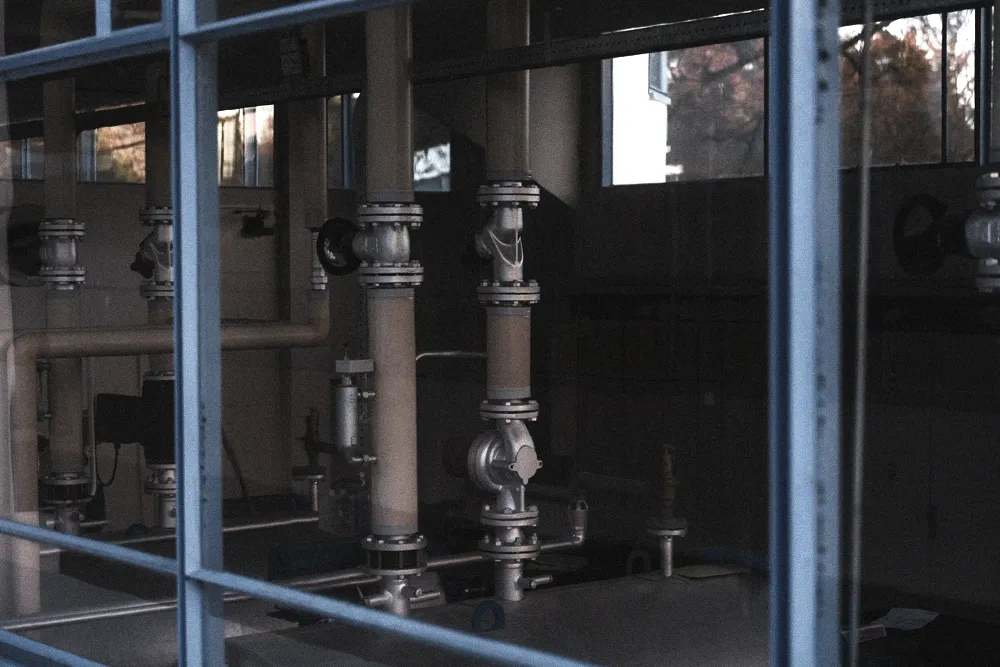
The exact process depends on the refrigerant and the condition of the recovered material, but a reclamation workflow may include:
- Receiving and identifying recovered refrigerant
- Inspecting containers and accompanying records
- Sampling the contents
- Separating incompatible refrigerants or waste materials
- Removing oil, moisture, acids, particulates and non-condensable gases
- Restoring the required composition where technically appropriate
- Testing the finished batch
- Filling and labeling approved containers
- Maintaining batch and distribution records
Material that is heavily contaminated or contains an unsuitable mixture may be difficult or uneconomical to reclaim. Contractors can improve recovery value by avoiding cross-contamination and using separate, correctly labeled recovery cylinders.
Never combine unknown refrigerants simply to consolidate partially filled cylinders. Doing so can turn useful recovered material into a mixed batch requiring additional processing or destruction.
When HVAC Professionals Should Choose New Refrigerant
New-equipment commissioning
New refrigerant is generally the straightforward choice when charging newly installed equipment in accordance with the manufacturer’s instructions. It provides a clean, documented starting point and is consistent with normal commissioning practices.
This is especially relevant when additional refrigerant must be added to a factory charge because of field-installed line length.
Manufacturer, warranty, or project requirements
An OEM instruction, warranty condition, engineering specification, customer contract, or commissioning standard may require new refrigerant or a specific documented source.
The purchasing decision should follow those requirements. The fact that reclaimed refrigerant can meet a purity standard does not override a contract or manufacturer instruction.
Jobs requiring a factory-sealed supply chain
Some contractors, facility owners, laboratories, manufacturers, and critical-process customers prioritize factory-sealed containers and direct supply-chain documentation.
For those projects, new refrigerant may simplify customer approval and inventory control. Freon Shop’s refrigerant products are supplied as factory-sealed, brand-new products, but the technician must still verify the exact refrigerant and equipment requirements before ordering.
When reclaimed supply is not available
Reclaimed availability depends on how much of a specific refrigerant is recovered and successfully processed. A technician may have difficulty locating a reclaimed version of a newer or less commonly recovered refrigerant in the required quantity.
New product may be the practical compliant choice when suitable reclaimed inventory is unavailable and no rule requires reclaimed material for that application.
When Reclaimed Refrigerant May Be the Better Choice
Servicing older equipment
Reclamation can extend the service supply for equipment using refrigerants that are no longer produced for servicing or are becoming less available.
R-22 is an important example. Reclaimed R-22 can support compatible existing systems even though new R-22 production and import for U.S. servicing ended in 2020.
Maintaining a large installed equipment base
Commercial facilities may operate many pieces of equipment using the same refrigerant. A planned recovery and reclamation program can help the owner manage refrigerant across equipment replacements and repairs.
This can reduce dependence on newly produced material and improve tracking of recovered refrigerant.
Meeting sustainability objectives
Using reclaimed refrigerant returns existing material to service instead of relying exclusively on new production. However, purchasing reclaimed refrigerant does not compensate for poor leak management.
The strongest refrigerant-management program combines:
- Preventive maintenance
- Fast leak detection and repair
- Complete recovery
- Separation of different refrigerants
- Proper cylinder labeling
- Reclamation of suitable recovered material
- Destruction of material that cannot be returned to safe use
Preparing for future regulatory requirements
The EPA’s current HFC reclamation guidance states that beginning January 1, 2029, reclaimed HFCs must be used for servicing and repair in three covered subsectors:
- Supermarket systems
- Refrigerated transport
- Automatic commercial ice makers
This requirement is not a universal reclaimed-refrigerant mandate for every residential and commercial HVAC system. HVAC businesses should identify which customers and equipment fall within the covered subsectors rather than applying the rule too broadly.
Important 2026 Rules for Reclaimed HFCs
Beginning January 1, 2026, refrigerant sold, identified, or reported as reclaimed HFC refrigerant for equipment installation, servicing, or repair may contain no more than 15% virgin HFC by weight.
EPA-certified reclaimers must also apply required labeling to containers they fill with reclaimed HFCs for sale or distribution and maintain supporting batch records.
These requirements matter to contractors because the word “reclaimed” is now tied to specific composition, labeling, and documentation obligations. A supplier should not use the term casually for a container of recovered or merely recycled refrigerant.
The current requirements are summarized in the EPA’s 2026 reclaimed HFC fact sheet.
When Can Recovered or Recycled Refrigerant Be Reused?
For stationary refrigeration and air-conditioning equipment, refrigerant recovered from one system can generally be returned to that system or used in another system owned by the same person without first being reclaimed.
If the refrigerant changes ownership, however, it must generally be processed by an EPA-certified reclaimer before resale or transfer for use.
The EPA’s updated stationary refrigeration service-practice requirements make this ownership distinction clear.
Consider a supermarket company with several locations. Refrigerant recovered from one piece of company-owned equipment may be eligible for reuse in other equipment owned by the same company, provided the refrigerant is properly handled and technically suitable.
A contractor cannot assume the same rule permits recovered refrigerant from Customer A to be installed in Customer B’s system. Changing ownership triggers the reclamation requirement.
Motor-vehicle air-conditioning work is subject to separate Section 609 requirements and should not be treated as identical to stationary Section 608 service.
Does Reclaimed Refrigerant Perform Differently?
The source alone—new or reclaimed—should not be used to predict system performance. More important questions are:
- Is it the exact refrigerant specified for the equipment?
- Does it meet applicable purity and composition requirements?
- Is the container properly labeled?
- Was it stored and transported correctly?
- Was the system properly evacuated and charged?
- Are airflow, controls and mechanical components operating correctly?
Contaminated refrigerant can damage equipment regardless of how the seller describes it. Conversely, appropriately reclaimed and verified refrigerant is specifically processed so it can return to service.
Technicians should avoid promising that any refrigerant will correct a problem before confirming that low or contaminated refrigerant is actually the cause. Poor airflow, a restricted metering device, electrical faults, heat-exchanger fouling, or compressor damage can produce similar symptoms.
Is Reclaimed Refrigerant Always Less Expensive?
No. Reclaimed refrigerant is not automatically cheaper.
Its price can reflect:
- Acquisition of recovered material
- Transportation to a consolidator or reclaimer
- Chemical identification
- Separation of mixed refrigerants
- Oil and contaminant removal
- Laboratory testing
- Batch documentation
- Approved cylinders and labels
- Reclamation yield
- Supply and demand for the specific refrigerant
A clean, well-separated batch is easier to process than a cylinder containing several unknown refrigerants. For legacy products with limited supply, reclaimed refrigerant may command a significant price because it is one of the few compliant sources available for existing equipment.
EPA’s refrigerant reclamation trend data show that reported HFC reclamation volume increased approximately 30% in 2024 compared with 2023. EPA expects reclamation to play a growing role as virgin HFC production and consumption are phased down.
Procurement Checklist for HVAC Professionals
| Check | Question to Ask | Why It Matters |
|---|---|---|
| Equipment | Which refrigerant does the nameplate and manual specify? | Prevents incompatible charging and mixing |
| Application | Is this a first fill, service repair, retrofit, or owner reuse? | Determines technical and regulatory requirements |
| Source | Who manufactured, reclaimed, or distributed the product? | Supports traceability and accountability |
| Container | Is it sealed, undamaged and correctly labeled? | Reduces contamination and identification risks |
| Quality | What purity specification and testing support the claim? | Distinguishes reclaimed product from unknown recovered material |
| Compliance | Does the job fall under Section 608, Section 609, or a special sector rule? | Avoids applying the wrong requirements |
| Documentation | Can purchase and service records be retained with the job? | Supports customer, warranty and regulatory records |
Source:Compliance considerations are based on the EPA stationary refrigerant reclamation requirements and EPA refrigerant sales restrictions.
Common Selection Mistakes
Treating recovered refrigerant as reclaimed
Recovery does not prove purity. Do not sell or transfer recovered refrigerant to a new owner as reclaimed product without the required reprocessing and verification.
Choosing only by price
A lower cylinder price does not justify questionable purity, incorrect labeling, incompatible refrigerant, or missing documentation.
Assuming reclaimed means inferior
Proper reclamation is a defined processing and testing pathway. Evaluate the product against the applicable specification and records, not the fact that its feedstock was recovered.
Assuming reclaimed means universally acceptable
Some OEM, warranty, customer, commissioning, or contractual requirements may call for new refrigerant. Confirm the job requirements before ordering.
Mixing new and reclaimed refrigerants carelessly
A technician should never mix different refrigerant designations. Even when new and reclaimed containers contain the same refrigerant designation, charging and inventory procedures must preserve purity and traceability.
Using a substitute without an approved retrofit
Whether refrigerant is new or reclaimed has no bearing on whether it is compatible with another refrigerant system. A reclaimed replacement blend is not automatically a drop-in substitute.
Frequently Asked Questions
Is reclaimed refrigerant the same as recycled refrigerant?
No. Recycled refrigerant has been cleaned for reuse but has not necessarily undergone full reclamation testing. Reclaimed refrigerant is reprocessed and verified against the applicable purity specifications.
Can reclaimed refrigerant be used in residential air conditioners?
It may be used when it is the correct refrigerant for the system, meets applicable requirements, and is not prohibited by the equipment manufacturer or another controlling specification. A qualified Section 608 technician should make the charging decision.
Can new and reclaimed refrigerant of the same type be mixed?
Do not combine supplies casually. Contractors must maintain correct refrigerant identity, purity and records. Unknown, mislabeled, or contaminated material should be isolated instead of added to a clean cylinder or system.
Is reclaimed R-22 legal?
Yes, properly reclaimed R-22 can be used to service compatible existing equipment. Reclamation is an important part of maintaining the service supply after new R-22 production and import ended.
Does reclaimed refrigerant meet AHRI Standard 700?
Reclaimed refrigerant must be processed to the applicable purity level referenced by EPA. AHRI also operates a voluntary certification program covering reclaimed refrigerants tested to AHRI Standard 700. Contractors should check the specific supplier’s documentation instead of assuming every cylinder has voluntary AHRI certification.
Who can buy refrigerant?
The EPA refrigerant sales restriction generally limits refrigerants intended for stationary refrigeration and air-conditioning equipment to Section 608-certified technicians and qualifying employers or authorized purchasers. Separate rules apply to small cans of approved motor-vehicle refrigerants and resale transactions.
Will reclaimed HFC refrigerant be mandatory everywhere in 2029?
No. The federal requirement beginning January 1, 2029 applies to servicing and repair in the specified supermarket, refrigerated-transport, and automatic-commercial-ice-maker subsectors. It is not a nationwide reclaimed-content requirement for every home air conditioner.
Final Recommendation
HVAC professionals should choose new refrigerant when the job involves new-equipment commissioning, a factory-sealed sourcing requirement, an OEM or warranty condition, or limited reclaimed availability.
Choose properly documented reclaimed refrigerant when servicing compatible existing equipment, supporting legacy refrigerant supply, advancing a customer’s refrigerant-management program, or complying with a rule that requires reclaimed HFCs.
In either case, the correct refrigerant designation, verified quality, documentation, legal sourcing, and proper service procedure matter more than the word “new” or “reclaimed.”
For jobs requiring new, factory-sealed refrigerant, eligible purchasers can review the Freon Shop refrigerant collection. Always confirm equipment compatibility and have charging, recovery, and repair work performed by a qualified technician with the appropriate EPA certification.