
Published September 3, 2026
Yes. Dirty evaporator or condenser coils can significantly reduce an air conditioner’s cooling performance. Dirt acts as a barrier to heat transfer, while heavier debris can restrict airflow through the coil. The system may run longer, deliver warmer air, struggle to reach the thermostat setting, use more electricity, or develop ice on the indoor coil.
Dirty coils can also produce symptoms that resemble low refrigerant, an incorrect refrigerant charge, a weak fan, or a failing compressor. That is why a technician should inspect airflow and coil condition before adding or removing refrigerant.
Why Clean Coils Matter to an Air Conditioner
A central air conditioner normally has two primary coils:
- The indoor evaporator coil absorbs heat from indoor air.
- The outdoor condenser coil releases that heat into the surrounding air.
Refrigerant carries heat between the two coils. For the system to cool effectively, air must move through the coil fins and heat must pass efficiently between the air, metal tubing, fins, and refrigerant.
A layer of dirt interferes with that process. On the evaporator, it can reduce indoor airflow and prevent heat from reaching the cold coil surface. On the condenser, it can prevent the system from releasing indoor heat outside.
The ENERGY STAR maintenance checklist states that dirty evaporator and condenser coils reduce a system’s ability to cool, make it run longer, increase energy costs, and may reduce equipment life.
How a Dirty Evaporator Coil Reduces Cooling
The evaporator coil is usually located inside an air handler, furnace cabinet, or indoor fan-coil unit. Air from the home passes through a filter and then across this coil.
Dust that bypasses a poorly fitted, missing, damaged, or overloaded filter may stick to the damp coil surface. Pet hair, construction dust, cooking residue, tobacco smoke, and other airborne material can accelerate accumulation.
Airflow Through the Coil Declines
As the spaces between the fins become obstructed, the blower has more difficulty moving air through the coil. Less conditioned air reaches the supply ducts and rooms.
Homeowners may notice:
- Weak airflow from multiple supply vents
- Some rooms remaining warmer than others
- Longer cooling cycles
- A thermostat that does not reach its setting
- Increasing indoor humidity
- More fan noise or unusual air-handler sound
A clean filter does not prove that the evaporator is clean. A coil can accumulate fouling gradually over several seasons or retain dirt from a previous period of poor filtration.
Heat Transfer Becomes Less Effective
Dirt coating the fins creates resistance between the warm indoor air and the cold coil. Even if some air continues moving, the refrigerant may absorb less heat than the system was designed to transfer.
The result can be an air conditioner that appears to operate normally but delivers less total cooling. Supply air may still feel cool at first, yet the system cannot remove heat quickly enough during warm afternoon conditions.
The Coil May Freeze
An evaporator depends on a steady supply of warm indoor air. When dirt substantially reduces airflow, the coil may absorb too little heat. Its surface temperature can fall low enough for condensed moisture to freeze.
As frost becomes ice, airflow falls further. This creates a cycle:
- Dirt reduces airflow.
- The coil receives less indoor heat.
- Moisture begins freezing.
- Ice blocks more airflow.
- Cooling performance falls even further.
The U.S. Department of Energy’s air-conditioner diagnostic guidance explains that evaporator fouling reduces airflow and capacity, can cause the coil to freeze, and may eventually contribute to compressor damage.
If ice is visible on the indoor coil, refrigerant line, or air handler, turn off cooling and arrange for service. Do not attempt to scrape ice from the coil because the thin fins and refrigerant tubing can be damaged.
How a Dirty Condenser Coil Affects Performance
The condenser coil surrounds or forms part of the outdoor unit. Its purpose is to release heat that the refrigerant absorbed inside the home, along with heat generated by the compression process.
Outdoor coils are exposed to contaminants including:
- Grass clippings
- Leaves and seeds
- Cottonwood fibers
- Dust and soil
- Pollen
- Dryer lint
- Pet hair
- Grease or exhaust residue
- Overgrown vegetation
When debris covers the condenser, the outdoor fan cannot move enough air through the fins. Heat remains in the refrigerant instead of being released efficiently.
Condensing Temperature and Pressure May Increase
The system may operate at a higher condensing temperature to move heat through the obstructed coil. That typically increases the work required from the compressor.
A dirty condenser may therefore produce:
- Longer runtime
- Reduced cooling capacity
- Higher electrical consumption
- Elevated operating pressure
- High-pressure safety trips
- Excessive compressor temperature
- Premature compressor or fan wear
Carrier’s current air-conditioner cleaning guidance notes that a dirty condenser can increase compressor energy consumption and warns that improper high-pressure cleaning can bend the delicate fins.
Common Symptoms of Dirty AC Coils
| Observed symptom | Possible coil-related cause | Other conditions to rule out |
|---|---|---|
| Weak supply airflow | Dirty evaporator restricts airflow | Clogged filter, blower fault, closed registers, or duct restriction |
| AC runs but the house stays warm | Reduced heat absorption or heat rejection | Low refrigerant, compressor wear, high load, or duct leakage |
| Ice on the indoor coil or suction line | Evaporator fouling reduces airflow and heat load | Low charge, blower problem, filter restriction, or metering fault |
| Higher electricity use | Longer runtime or increased compressor work | Extreme weather, thermostat changes, duct leakage, or aging equipment |
| High head pressure | Condenser cannot release heat effectively | Overcharge, failed fan, recirculating air, noncondensables, or high ambient temperature |
| Poor humidity control | Reduced evaporator airflow or cooling capacity | Oversized equipment, short cycling, infiltration, or drainage problems |
Source: Diagnostic relationships are based on the ENERGY STAR cooling-maintenance checklist, the DOE air-conditioner diagnostic guideline, and Carrier’s AC troubleshooting guidance. Symptoms are not proof of one specific fault.
Dirty Coils vs Low Refrigerant
Dirty coils and low refrigerant can both cause poor cooling, long runtime, higher energy consumption, or evaporator icing. However, they affect the refrigeration cycle differently.
A dirty evaporator primarily reduces airflow and heat transfer. Low refrigerant usually results from a leak, an installation error, or refrigerant lost during previous service. An air conditioner does not normally consume refrigerant during operation.
A dirty condenser may produce elevated condensing pressure that resembles an overcharged system. Removing refrigerant without recognizing the dirty coil can leave the system undercharged after cleaning.
| Diagnostic area | Dirty evaporator tendency | Low-refrigerant tendency | Dirty condenser tendency |
|---|---|---|---|
| Airflow | Often reduced | May initially remain normal | Outdoor coil airflow may be restricted |
| Evaporator icing | Possible from inadequate heat load | Possible from reduced evaporating pressure | Not usually the primary symptom |
| Head pressure | Response varies with load and controls | Often lower than expected | Often elevated |
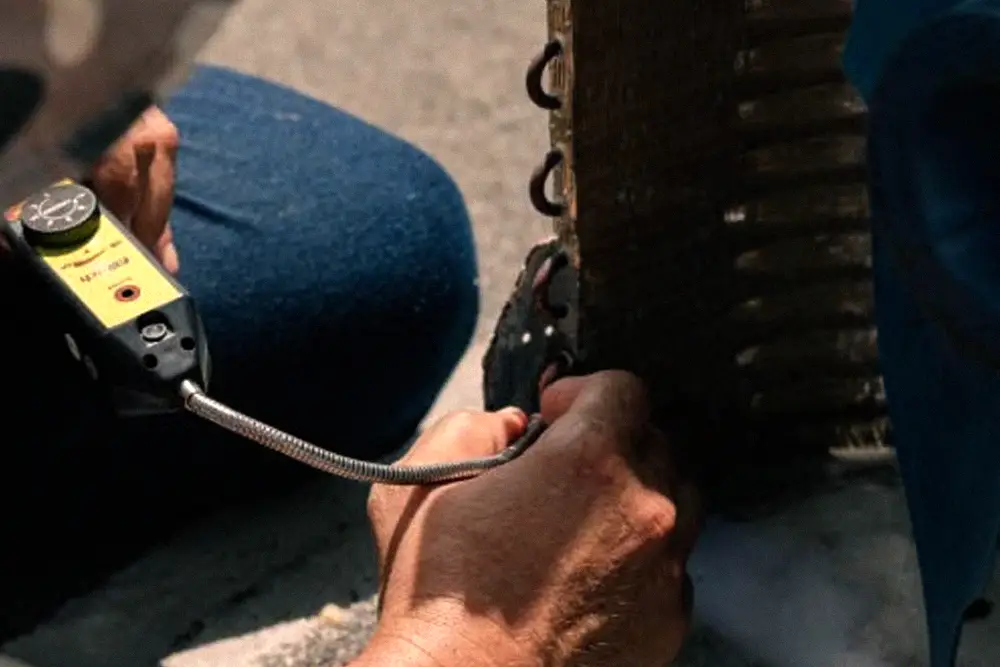
| Best confirmation | Coil inspection and airflow testing | Complete charge and leak diagnosis | Coil inspection, airflow, temperature, and pressure evaluation |
Source: The patterns above are general diagnostic tendencies summarized from the DOE diagnostic guideline. Measurements must be compared with current operating conditions and the applicable equipment manufacturer’s service data.
Freon Shop’s guide to low AC refrigerant symptoms explains why icing and poor cooling do not prove that the system needs refrigerant. Technicians can also review the differences between overcharged and undercharged AC systems before changing the charge.
Can Dirty Coils Increase Electricity Bills?
Yes. A dirty system may operate longer to deliver the same amount of cooling. A restricted condenser may also force the compressor to work against a higher condensing temperature.
Electricity use can rise even before the home becomes noticeably uncomfortable. Early coil fouling may reduce performance gradually, so the homeowner becomes accustomed to longer cooling cycles until a particularly hot day exposes the problem.
Coil condition should therefore be evaluated alongside:
- Filter condition
- Indoor and outdoor airflow
- Thermostat settings
- Fan operation
- Refrigerant charge
- Duct leakage
- Equipment runtime
- Outdoor temperature
- Indoor cooling load
Cleaning will not solve a refrigerant leak, failed fan motor, damaged compressor, or incorrectly sized system. It can, however, remove an important source of avoidable heat-transfer resistance.
Can Homeowners Clean AC Coils?
Homeowners can perform limited exterior maintenance, but opening equipment or using chemicals should normally be left to a qualified HVAC technician.
Safe basic steps may include:
- Turn off cooling at the thermostat.
- Disconnect power before approaching moving or electrical components.
- Remove loose leaves and debris from around the outdoor cabinet.
- Trim vegetation without damaging refrigerant lines or wiring.
- Keep discharge air unobstructed.
- Replace or clean the air filter according to the equipment instructions.
- Schedule service if fins are heavily blocked, oily, corroded, damaged, or covered by stubborn material.
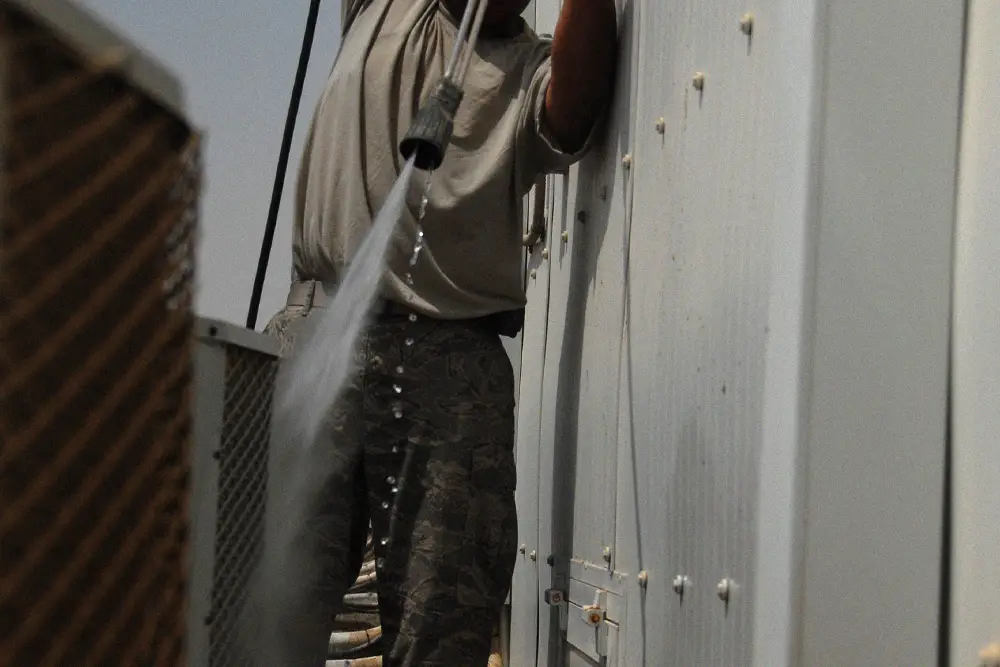
Avoid using a pressure washer. High-pressure water can flatten aluminum fins, push contamination deeper into the coil, damage electrical components, or create a new airflow restriction.
Do not remove the outdoor fan assembly, access energized electrical compartments, open the refrigerant circuit, or apply an unapproved chemical. Some coil cleaners can damage aluminum, protective coatings, insulation, drain pans, or surrounding materials when used incorrectly.
What Professional Coil Cleaning Should Include
A proper service visit involves more than spraying the outside of the cabinet. Depending on the equipment and contamination, a technician may:
- Disconnect and verify electrical power
- Inspect both sides of the coil where accessible
- Protect electrical components
- Remove loose surface debris
- Select a cleaner approved for the coil material and coating
- Clean in the correct direction to move debris out of the coil
- Rinse when the product instructions require it
- Straighten damaged fins when appropriate
- Clean the drain pan and inspect the condensate drain
- Inspect the blower and filter system
- Restore panels and airflow paths
- Operate the equipment and verify performance
The technician should evaluate the system after cleaning. Refrigerant pressures or temperatures recorded while a coil is dirty may change once normal heat transfer and airflow are restored.
How Often Should AC Coils Be Checked?
There is no single cleaning interval that fits every property. Coil fouling depends on climate, landscaping, equipment location, filtration, pets, construction activity, cooking residue, nearby roads, dryer vents, and operating hours.
For many homes, a professional inspection before the cooling season is a practical starting point. More frequent inspection may be appropriate when:
- Cottonwood or pollen is heavy
- The property has pets
- The outdoor unit is near a dryer vent
- Landscaping produces leaves or grass clippings
- The home has recently been remodeled
- The indoor filter becomes dirty quickly
- The equipment operates for long cooling seasons
- Grease or industrial contamination is present
Filter maintenance is one of the best ways to slow evaporator fouling. Make sure the replacement filter fits properly and does not allow air to bypass its edges.
Frequently Asked Questions
Can a dirty condenser coil make an AC blow warm air?
Yes. A heavily obstructed condenser may be unable to release enough heat outdoors. Cooling capacity can fall, operating pressure may rise, and the air from the vents may become warmer than expected.
Can a dirty evaporator coil cause ice?
Yes. Dirt may restrict airflow and reduce the heat reaching the evaporator. Moisture on the coil can then freeze. Low refrigerant, a clogged filter, closed vents, or a blower problem can cause similar icing.
Will cleaning dirty coils restore normal cooling?
It may restore substantial performance when coil fouling is the primary problem. Cooling may remain weak if the system also has an incorrect charge, refrigerant leak, fan problem, duct issue, metering-device fault, compressor wear, or excessive cooling load.
Can dirty coils look like low refrigerant?
Yes. Both conditions can produce poor cooling, long runtime, icing, and abnormal pressures. Coil condition and airflow should be checked before diagnosing the charge.
Should refrigerant be added after coil cleaning?
Not automatically. Refrigerant should be added only when testing confirms that the charge is below the manufacturer’s requirement and the cause of the loss has been addressed. A dirty coil alone does not consume refrigerant.
Why is my AC still not cooling after the outdoor coil was cleaned?
The indoor evaporator may also be dirty, or the problem may involve the filter, blower, thermostat, ducts, refrigerant charge, expansion device, compressor, or electrical controls. A complete performance evaluation is needed when basic maintenance does not restore cooling.
Final Takeaway
Dirty coils can absolutely cause low cooling performance. A fouled evaporator limits airflow and indoor heat absorption, while a dirty condenser limits outdoor heat rejection. Either problem can increase runtime, energy consumption, equipment temperature, and mechanical stress.
Because dirty coils can imitate refrigerant and airflow faults, diagnosis should begin with the complete system—not an assumption that the AC needs more refrigerant. Inspecting the filter, coils, fans, airflow, operating conditions, and charge together provides a much more reliable path to restoring cooling.