An undercharged AC system typically shows a starved evaporator, high superheat, low subcooling, reduced capacity, and lower-than-expected operating pressures. An overcharged system more commonly shows excessive liquid stored in the condenser, high subcooling, elevated condensing pressure, reduced efficiency, and—in some systems—low superheat or liquid-return risk.
Those are diagnostic patterns, not universal rules. A technician should never declare an air conditioner overcharged or undercharged from suction pressure alone. Airflow, indoor and outdoor load, metering-device behavior, coil condition, line-set configuration, system capacity, and manufacturer charging instructions can substantially change the readings.
Why Charge Diagnosis Requires More Than Pressures
Refrigerant charge affects how much of the evaporator and condenser is occupied by liquid, vapor, or a changing mixture of both. A charge error therefore changes pressures, temperatures, heat-transfer area, compressor loading, and system capacity.
Unfortunately, other faults can create similar changes. For example:
- Low indoor airflow can reduce suction pressure.
- A restricted metering device can produce high superheat.
- A dirty condenser can raise head pressure.
- Noncondensable gas can imitate an overcharge.
- A liquid-line restriction can alter subcooling and starve the evaporator.
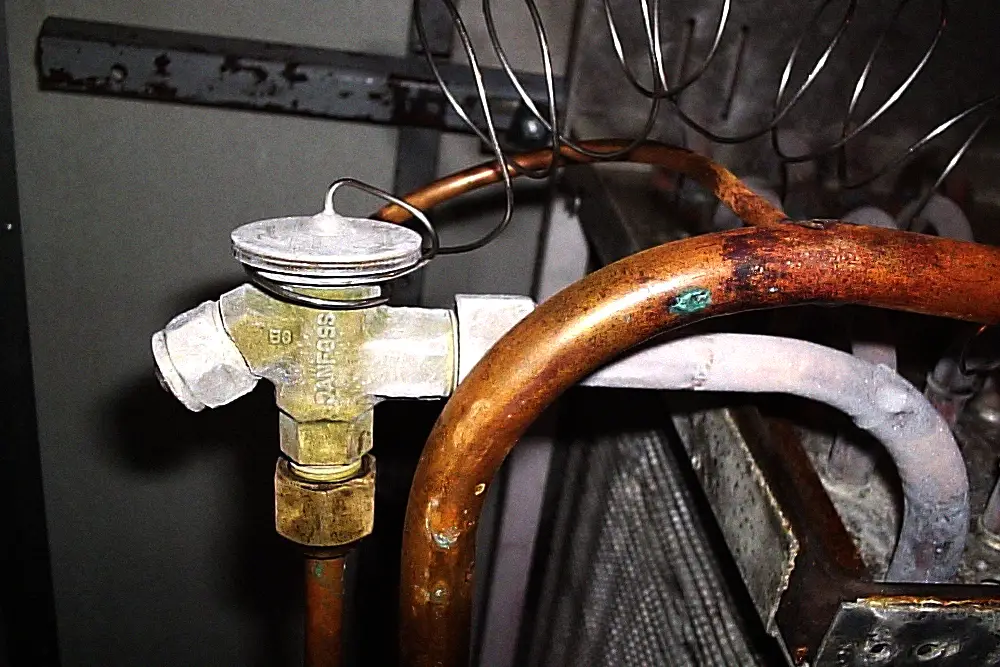
- A failed TXV or misplaced sensing bulb can cause overfeeding or underfeeding.
- Incorrect sensor readings can create a false diagnosis on electronically controlled systems.
Carrier University’s mechanical troubleshooting curriculum treats airflow, load, superheat, subcooling, pressures, metering-device type, and manufacturer charging methods as connected parts of the diagnosis rather than independent readings.
The strongest conclusion comes from a consistent group of measurements taken under valid, stable operating conditions.
Overcharged vs Undercharged AC: Typical Diagnostic Patterns
The following table describes common cooling-mode tendencies. Actual targets must come from the applicable unit charging label, installation instructions, service manual, or manufacturer software.
| Observation | Undercharged tendency | Overcharged tendency | Important look-alikes |
|---|---|---|---|
| Suction pressure | Often low | May be normal or elevated; response varies with metering control and load | Low airflow, evaporator icing, restriction, or faulty sensor |
| Discharge or head pressure | Often lower than expected | Often elevated as condenser liquid inventory increases | Dirty condenser, failed fan, recirculation, noncondensables, or high ambient temperature |
| Superheat | Usually high because the evaporator is starved | May be low if the evaporator is overfed; a TXV can mask this tendency | Metering restriction, TXV fault, sensing-bulb issue, or incorrect airflow |
| Subcooling | Usually low | Usually high because more liquid backs up in the condenser | Liquid-line restriction, condenser airflow fault, or measurement error |
| Cooling capacity | Reduced due to insufficient evaporator feeding | May decline as condensing pressure and compressor work increase | Dirty coils, duct leakage, load changes, or compressor wear |
| Compressor condition | High suction-gas superheat and elevated discharge temperature may occur | Higher compression load and possible liquid-return risk in severe cases | Low airflow, dirty condenser, failed fan, or metering-device malfunction |
Source: Typical superheat and subcooling directions are described in Trane’s refrigerant-charge training material. Carrier documentation also identifies low charge with reduced suction pressure and high compressor-inlet superheat. These patterns must be compared with the applicable equipment documentation.
Symptoms of an Undercharged AC System
High superheat
When the evaporator receives too little refrigerant, the available liquid may completely boil off early in the coil. The remaining coil length heats the vapor farther above saturation temperature, producing high superheat.
High superheat is a strong undercharge clue when it appears with low subcooling and other supporting measurements. It is not proof by itself because a restricted metering device, liquid-line restriction, weak refrigerant feed, or high evaporator load may also raise superheat.
Low subcooling
An undercharged system has less liquid refrigerant available to occupy the condenser. The liquid may leave the condenser with little temperature reduction below saturation, resulting in low subcooling.
On equipment designed to be charged by subcooling, a value below the manufacturer target can support an undercharge diagnosis—but only after airflow, coil cleanliness, operating mode, sensor placement, and valid test conditions have been confirmed.
Low suction pressure
A starved evaporator generally operates at a lower evaporating pressure. This can reduce coil temperature and sometimes lead to frost near the metering-device outlet or evaporator inlet.
Do not assume that every low suction reading indicates low charge. Restricted airflow, a dirty evaporator, an iced coil, an incorrectly operating blower, a restricted filter drier, or an underfeeding TXV can all lower suction pressure.
Low or reduced head pressure
With less refrigerant circulating and less liquid stored in the condenser, condensing pressure may be lower than expected for the outdoor conditions.
The combination of low suction, low head pressure, high superheat, and low subcooling is much more persuasive than low suction pressure alone.
Poor capacity and extended runtime
A starved evaporator cannot use its full surface effectively. Supply-air temperature may rise, space temperature may drift above setpoint, and the compressor may run for longer periods.
A severe undercharge can eventually result in a low-pressure control trip or another protective shutdown, depending on equipment design.
Elevated compressor discharge temperature
High suction superheat means hotter vapor may reach the compressor. Low refrigerant mass flow can also reduce the cooling effect the returning suction gas provides in compressors that depend on it.
Carrier’s current equipment documentation states that when charge is below the required level, suction pressure can fall while compressor-inlet superheat rises. The same document directs technicians to verify both superheat and subcooling and check for leaks.
Symptoms of an Overcharged AC System
High subcooling
High subcooling is one of the most useful overcharge indicators on systems designed to be charged by the subcooling method.
As excess refrigerant accumulates, more of the condenser becomes occupied by liquid. The point at which vapor finishes condensing can move farther upstream, leaving a greater portion of the coil to cool the liquid below its saturation temperature.
A liquid-line restriction can also produce abnormal subcooling upstream of the restriction, so technicians should check for temperature differences and pressure drop before removing charge.
Elevated head pressure
Excess liquid in the condenser can reduce effective condensing area. The system may then operate at a higher condensing temperature and pressure to reject the same amount of heat.
High head pressure has several common causes besides overcharge:
- Dirty or obstructed condenser
- Incorrect condenser-fan rotation
- Failed or slow condenser fan
- Hot-air recirculation
- Excessive outdoor temperature
- Noncondensable gas
- Restricted discharge piping
- Closed or partially closed service valve
Removing refrigerant from a system with a dirty condenser will not correct the original problem and can leave the system undercharged after the coil is cleaned.
Low or unstable superheat
An overcharged system may feed the evaporator more heavily, resulting in low superheat and a risk of wet vapor or liquid reaching the suction line. This pattern is more apparent on some fixed-orifice systems.
A properly controlling TXV or electronic expansion valve may maintain relatively normal superheat even as the condenser stores excessive liquid. That is one reason high subcooling and elevated head pressure are usually more useful overcharge indicators on TXV equipment.
Increased compressor power or temperature
Higher condensing pressure increases the work required from the compressor. Compressor current may rise, although the exact response depends on compressor type, system load, voltage, airflow, and operating controls.
Severe overcharge can contribute to high-pressure trips. If liquid returns to the compressor, oil dilution, abnormal noise, or mechanical damage may occur.
Reduced efficiency and capacity
An overcharged system may still produce cool air, which can make the problem less obvious to occupants. However, higher compression ratio, elevated condensing pressure, and reduced condenser performance can increase energy consumption and shorten equipment life.
The ENERGY STAR maintenance checklist states that both excessive and insufficient refrigerant can reduce system efficiency, increase energy costs, and reduce equipment life.
How the Metering Device Changes the Diagnosis
Technicians must identify the metering device before selecting a charging method.
Fixed-orifice or piston systems
A fixed metering device does not actively regulate evaporator-outlet superheat. Charge is commonly evaluated using a manufacturer-specified superheat method under approved indoor and outdoor conditions.
Typical tendencies are more visible:
- Undercharge: high superheat and low subcooling
- Overcharge: low superheat and high subcooling
However, airflow and load still have a major effect on superheat.
TXV systems
A TXV modulates refrigerant flow to control evaporator-outlet superheat. On a moderately undercharged system, the valve may open farther and temporarily hide some of the superheat change. As the liquid supply becomes inadequate, superheat rises and capacity falls.
During an overcharge, the TXV may continue holding superheat near its target while liquid accumulates in the condenser and subcooling rises. These systems are commonly charged according to manufacturer-specified subcooling.
Electronic expansion valve and variable-capacity systems
Electronically controlled and variable-speed equipment may require a special charging mode, fixed compressor speed, specific fan operation, service software, or a stabilization period.
Do not force a traditional fixed-speed charging procedure onto equipment whose manufacturer specifies another method.
Lennox installation documentation for current variable-capacity equipment instructs technicians to establish defined operating conditions, use the applicable charging label, calculate subcooling, and repeat the measurements after refrigerant is added or removed.
Why a Sight Glass Does Not Prove Charge
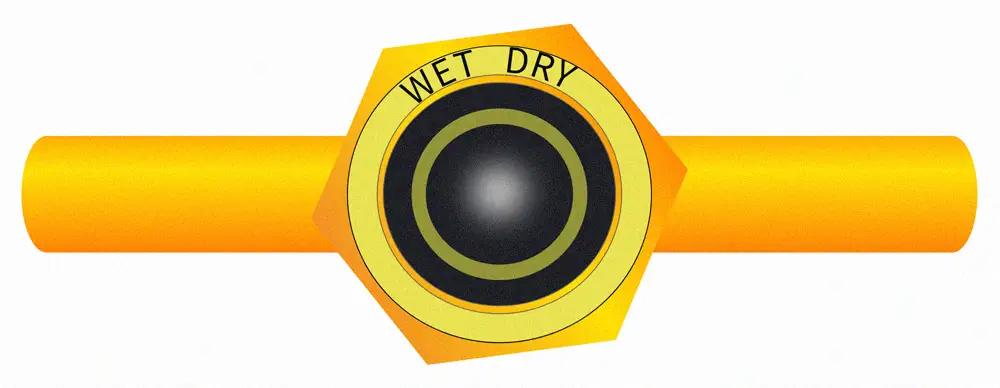
A liquid-line sight glass can provide useful supporting information, but bubbles do not always equal undercharge.
Bubbles may result from:
- Low refrigerant charge
- Flash gas caused by pressure drop
- Insufficient subcooling
- A liquid-line restriction
- Rapid load changes
- Incorrect receiver or condenser conditions
Likewise, a clear sight glass does not prove that the system has the correct charge. It may become clear before the correct total charge or target subcooling is reached.
Common Faults Mistaken for Incorrect Charge
| Observed pattern | Charge conclusion someone may jump to | Other conditions to rule out |
|---|---|---|
| Low suction pressure | Undercharge | Low airflow, dirty evaporator, ice, blower fault, or restriction |
| High head pressure | Overcharge | Dirty condenser, failed fan, noncondensables, recirculation, or high ambient load |
| High superheat | Undercharge | Metering restriction, TXV underfeeding, lost bulb contact, or high evaporator load |
| Low superheat | Overcharge | TXV overfeeding, loose sensing bulb, low load, or airflow conditions |
| High subcooling | Overcharge | Liquid-line restriction, condenser airflow problem, or incorrect measurement location |
Source: Manufacturer troubleshooting information from Trane cautions that low suction and discharge pressures with normal subcooling may indicate a problem other than refrigerant shortage and specifically warns against adding refrigerant based on that pattern alone.
A Reliable Technician Charging Workflow
1. Verify equipment and refrigerant identity
Record the outdoor model, indoor-coil model, metering device, compressor type, refrigerant designation, factory charge, approved line-set adjustment, and target charging method.
Do not assume that equipment bearing the same refrigerant designation uses the same target superheat or subcooling.
2. Confirm valid test conditions
Before evaluating charge:
- Establish the manufacturer-required operating mode.
- Confirm adequate indoor heat load.
- Verify acceptable indoor return conditions.
- Measure outdoor ambient temperature.
- Allow pressures and temperatures to stabilize.
- Force the specified capacity or charging mode when required.
A system operating at minimum inverter speed cannot necessarily be evaluated using a full-capacity charging chart.
3. Verify airflow before adjusting refrigerant
Check:
- Filter condition
- Blower operation and speed
- Evaporator cleanliness
- Supply and return restrictions
- Static pressure where appropriate
- Zone dampers
- Indoor and outdoor fan operation
Charge readings taken across an iced evaporator or with incorrect airflow are unreliable.
4. Inspect the condenser and liquid path
Rule out condenser fouling, blocked airflow, fan faults, liquid-line restrictions, temperature drops across a filter drier, and partially closed valves.
This step is especially important when high head pressure or high subcooling suggests an overcharge.
5. Measure pressure and line temperature together
Calculate actual superheat and subcooling using:
- Accurate pressure measurements
- Properly attached, insulated temperature probes
- The correct pressure-temperature data
- The correct saturation reference for the refrigerant and calculation
- The manufacturer’s prescribed measurement locations
A pressure without a corresponding line temperature cannot provide superheat or subcooling.
6. Compare the complete pattern with manufacturer targets
A charge decision should agree with:
- Superheat
- Subcooling
- Suction pressure
- Head pressure
- Indoor load
- Outdoor ambient conditions
- Airflow
- Compressor current and discharge temperature where applicable
- Unit charging chart or service procedure
7. Find the reason for an undercharge
Refrigerant does not normally disappear through operation. If the system is undercharged, look for a leak or an earlier installation or service error.
After leak repair, Carrier’s refrigerant-leak service guidance describes recharging with the manufacturer-specified amount by weight and then verifying operation with superheat and subcooling.
8. Recover excess refrigerant instead of venting it
If overcharge is confirmed, remove refrigerant using appropriate recovery practices and approved equipment. Do not bleed refrigerant into the atmosphere.
The EPA’s current venting rule generally prohibits intentional venting of ozone-depleting refrigerants and their substitutes during stationary air-conditioning service, subject to limited regulatory exceptions.
9. Stabilize and verify again
After adding or removing refrigerant:
- Allow the system to stabilize.
- Repeat all required measurements.
- Confirm cooling capacity and airflow.
- Check for leaks.
- Record the final charge adjustment and readings.
- Replace service-port caps according to the manufacturer’s instructions.
Certification and Refrigerant Selection
EPA regulations define attaching gauges, adding refrigerant, and removing refrigerant as technician activities requiring the applicable Section 608 certification for stationary equipment.
The refrigerant must match the equipment nameplate and manufacturer documentation. R22, R410A, R32, R454B, and other refrigerants are not interchangeable and must not be mixed.
Once diagnosis confirms the correct refrigerant and required quantity, eligible buyers can review Freon Shop’s refrigerant collection. Product availability alone does not establish compatibility with a particular AC system.
Frequently Asked Questions
Does high head pressure always mean an AC is overcharged?
No. Dirty condenser coils, fan problems, hot-air recirculation, high outdoor temperature, noncondensables, and restrictions can also raise head pressure.
Does low suction pressure prove an undercharge?
No. Restricted indoor airflow, evaporator icing, metering-device faults, liquid-line restrictions, and sensor problems can produce low suction pressure.
What combination most strongly suggests undercharge?
High superheat and low subcooling accompanied by lower-than-expected suction and head pressures is a common undercharge pattern. The system must still be tested under valid conditions and compared with manufacturer data.
What combination most strongly suggests overcharge?
High subcooling combined with elevated condensing pressure is a common overcharge pattern, particularly after condenser airflow and restrictions have been ruled out. Superheat may be low, but a TXV can keep it near normal.
Can a TXV hide an incorrect charge?
It can mask part of the superheat response while it remains within its control range. Subcooling, pressure, condenser behavior, and manufacturer charging targets remain important.
Can an overcharged system still cool?
Yes. It may continue producing cool air while operating inefficiently or at excessive condensing pressure. Cooling at the registers does not prove that the charge is correct.
Should refrigerant be added until suction pressure looks normal?
No. Suction pressure is influenced by load, airflow, metering, evaporator condition, and refrigerant charge. Charging to a preferred pressure without following the equipment procedure can create an overcharge.
Why is charge weighed during installation?
Weighing provides a controlled starting charge based on the factory amount and manufacturer line-set adjustments. Operating measurements are then used as required to verify the final charge.
The Bottom Line
Undercharged and overcharged AC systems usually create opposite superheat and subcooling trends, but pressures alone are not reliable enough to separate them.
Undercharge commonly produces high superheat, low subcooling, reduced pressures, a starved evaporator, and lower capacity. Overcharge commonly produces high subcooling, elevated condensing pressure, increased compressor work, and possible overfeeding or liquid-return risk.
The technician’s real job is to prove the cause. Establish the correct operating conditions, verify airflow, identify the metering device, inspect both coils and the liquid path, calculate superheat and subcooling, and compare the complete measurement set with the exact manufacturer charging procedure before adding or recovering refrigerant.