
To check whether a refrigerant cylinder is factory sealed, compare its unopened valve protection with the manufacturer’s expected packaging, inspect for damage or rework, and verify the cylinder’s identity against its carton and purchasing records.
A cap or a piece of shrink wrap alone is not enough. The strongest evidence comes from several checks agreeing: the correct seal, consistent labeling, an undamaged cylinder, and a traceable supplier.
Keep the valve closed throughout this inspection. Opening a cylinder to find out whether it was unopened defeats the purpose—and still does not establish the quality of its contents.
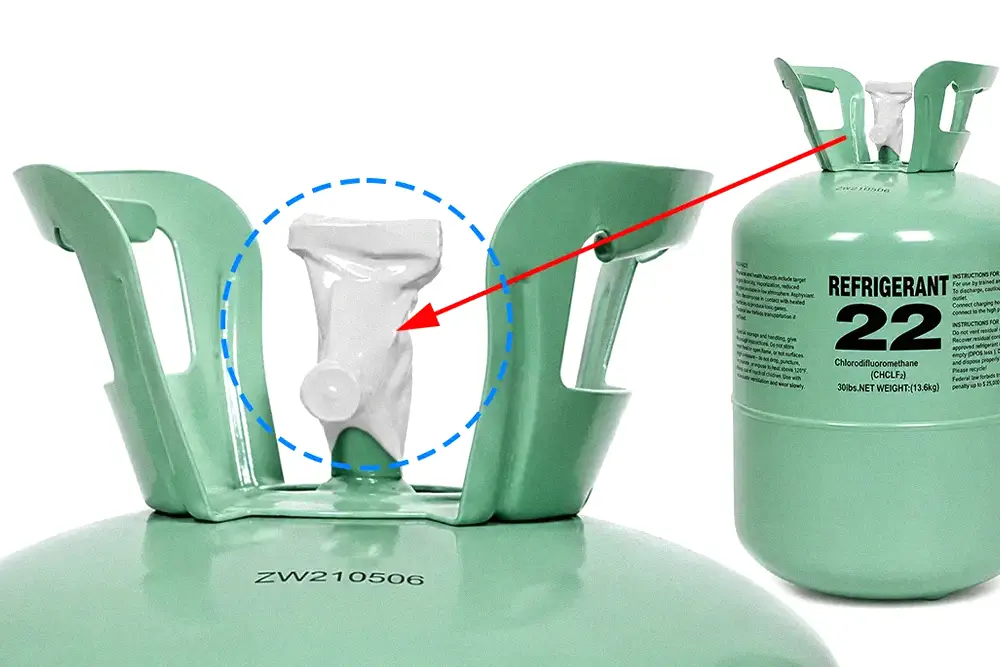
What Does “Factory Sealed” Actually Mean?
Factory sealed generally describes a cylinder that was closed and packaged during the original filling process and has not subsequently been opened.
However, several different features can appear around a cylinder’s valve:
- The valve contains the refrigerant when properly closed.
- An outlet cap or plug protects the connection and may have additional functions depending on its design.
- A sleeve, band, or security label may provide evidence of interference.
- A protective handle or collar helps shield the valve from physical damage.
- The carton protects the packaged cylinder during handling.
These features are not interchangeable. A protective cap that can be removed and replaced without visible damage does not, by itself, prove the cylinder is unopened.
Likewise, a sealed shipping carton does not establish that the valve seal inside it is original.
For broader background, Freon Shop’s guide to why technicians prefer factory-sealed refrigerant cylinders explains their value. The practical question at delivery is whether the specific cylinder in front of you matches its claimed condition.
Start With the Manufacturer’s Packaging—not a Generic Picture
There is no single universal refrigerant cylinder seal.
Manufacturers may use different sleeve materials, printed security features, closure arrangements, and authentication systems. Packaging can also vary by cylinder size, market, and production period.
For example, Chemours’ Opteon brand-assurance guidance tells buyers to check for its branded valve shrink sleeve and examine packaging for damage, rework, or irregular labeling. It describes additional code verification where applicable.
That is a manufacturer-specific example, not a requirement that every refrigerant brand use the same sleeve or code.
Before judging an unfamiliar cylinder, establish what should be present:
- Identify the producer and exact packaged product.
- Find the producer’s current packaging or authentication guidance.
- Compare the correct cylinder size and market version.
- Ask the supplier to explain any difference that remains.
An older website photograph may not show a recent packaging change. Conversely, a seller’s assurance that “they all look like that” is not a substitute for a verifiable explanation.
A Six-Step Refrigerant Cylinder Seal Inspection
1. Record the Delivery Condition Before Changing It
Photograph the shipment before removing packaging that could be relevant to a claim.
Useful photographs include the complete carton, shipping damage, cylinder label, valve protection, and any suspicious area. Take both a wider photograph showing the location and a close-up showing the detail.
Keep the order confirmation and packing slip.
This creates a record of how the product arrived. It also helps distinguish a damaged outer carton from a damaged cylinder seal—two different problems that may require different responses.
Do not peel back a security label merely to get a better photograph.
2. Examine the Expected Tamper-Evident Feature
Look for continuity where the manufacturer’s seal should prevent or reveal access.
Reasons to pause include:
- A cut or split across the sleeve.
- Missing sections or detached edges.
- Tape covering a damaged seal.
- A security label that appears lifted and reapplied.
- An unexplained extra layer of wrapping.
- Packaging that differs substantially from the verified example.
Interpret these observations carefully. A normal manufacturing seam is not necessarily a cut, and a wrinkled sleeve is not automatically evidence of resealing.
The useful question is whether the condition matches the expected packaging—or leaves an unresolved possibility of previous access.
3. Inspect the Valve Area Without Operating It
Look at accessible components without removing the seal, turning the valve, or connecting equipment.
Check for visible impact damage, a bent protective structure, corrosion, or other unexpected conditions. If the packaging prevents inspection of an important area, ask the supplier how it should be checked without destroying the original seal.
A valve that looks clean does not prove it has never been connected. Similarly, an intact sleeve does not make an obviously damaged cylinder acceptable.
Treat packaging integrity and physical safety as separate checks.
4. Match the Product Information
Compare the cylinder label, carton, and order record.
Confirm the refrigerant designation, stated net contents, producer or packager, and relevant product identifiers. Where a lot or batch number appears on multiple documents, check that the records correspond.
Not every number serves the same purpose. A cylinder manufacturing code, refrigerant batch number, and shipping tracking number may all be different legitimately.
If a number is unclear, ask what it identifies rather than assuming that every printed code must match.
Also distinguish net refrigerant weight from the combined weight of the cylinder, valve, carton, and contents.
5. Use the Producer’s Authentication Method Where Available
A printed QR code is not automatically proof of authenticity. It may be an ordinary product-information link, and a copied graphic can still look convincing.
Start from the manufacturer’s independently verified website and follow its instructions.
For applicable products, Arkema’s Forane anti-counterfeiting program describes security features and authentication codes. These checks apply to its packaging program, not universally to other brands.
If a code is unreadable, produces an unexpected result, or does not correspond with the product, stop and contact the producer or supplier. Save the result with your receiving photographs.
6. Confirm the Supply Record
An intact-looking seal is more meaningful when the seller can document what was supplied.
Retain an invoice identifying the seller and product. Ask whether the refrigerant is described as virgin, reclaimed, or otherwise processed, and obtain the applicable Safety Data Sheet.
An SDS explains hazards and handling. It is not a batch-specific purity report or proof that a particular cylinder came from the claimed producer.
If your purchasing specification requires a certificate of analysis, verify that the document identifies the relevant product and batch. A generic sample certificate should not be mistaken for testing of your shipment.
What Each Check Can—and Cannot—Tell You
| Inspection point | Useful evidence | Important limitation |
|---|---|---|
| Expected valve sleeve | No visible break or unexplained alteration | Appearance alone cannot establish authenticity |
| Protective cap | The expected connection protection is present | A replaceable cap may not reveal previous access |
| Carton condition | Visible shipping damage or package disturbance | Carton damage does not prove the cylinder was opened |
| Matching labels and records | Consistent product identification and traceability | Documents do not replace chemical testing |
| Manufacturer authentication | Additional verification under the applicable program | Does not override physical damage or safety concerns |
What Should You Do About a Broken or Suspicious Seal?
Do not connect the cylinder while its condition remains unresolved.
For a cylinder with a packaging concern but no suspected leak or immediate hazard, mark it as awaiting inspection and keep it out of usable inventory. Preserve the seal, carton, labels, and purchasing records.
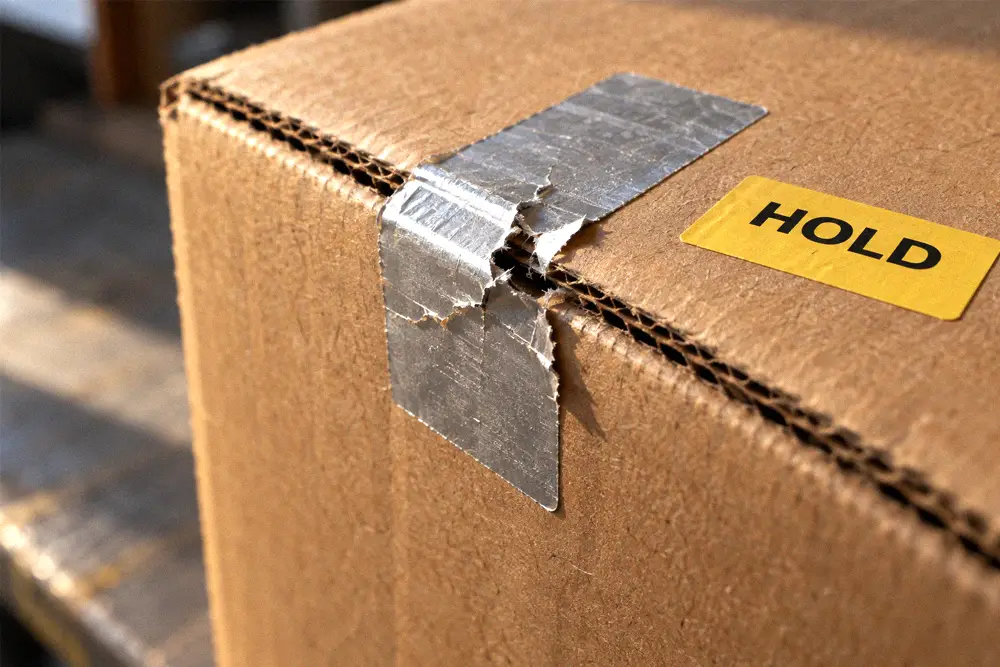
“The cylinder arrived with a split valve sleeve. We have not operated the valve or connected equipment. Please confirm the expected packaging and the inspection or return procedure.”
Avoid declaring the contents counterfeit or contaminated based only on an external defect.
Follow the relevant supplier’s process before arranging shipment. For example, Arkema’s defective-cylinder instructions request product and cylinder details and provide return authorization and instructions when a return is needed.
A suspected leak or serious cylinder damage is a different situation. Keep people away, follow the product SDS and site emergency procedure, and obtain qualified assistance. Do not place a leaking cylinder into an ordinary return shipment.
Avoid These Misleading “Proof” Tests
“It Weighs Enough, So It Must Be Unopened”
Weight cannot establish packaging history.
It also requires the right comparison. Arkema’s cylinder-weight guidance explains that tare weights vary and cautions against using general average tare weights to calculate contents.
Even an appropriate weight check does not identify the chemical inside.
“It Has Pressure, So the Contents Must Be Correct”
Do not open a cylinder to check whether it releases gas. That does not establish its identity, purity, or original sealed condition.
Chemical verification is a separate task. AHRI Standard 700 specifies refrigerant purity requirements and associated test methods. An external seal does not perform those tests.
“The Plastic Is Intact, So the Cylinder Must Be Safe”
The pressure container requires its own inspection.
In its unsafe-cylinder safety advisory, PHMSA warned about cylinders sold without the required DOT specification or UN-standard certification markings.
A wrapper cannot correct an unauthorized or damaged cylinder. Have unclear markings or structural concerns reviewed by a qualified person.
Does Factory Sealed Mean the Refrigerant Is Virgin?
No. Packaging condition and refrigerant processing history answer different questions.
A sealed container may hold virgin refrigerant or properly reclaimed refrigerant. Read the product description and applicable labeling rather than inferring origin from the seal.
The EPA’s definitions of recovery, recycling, and reclamation distinguish these processes. Reclamation involves reprocessing and analytical verification against specified requirements; merely closing a recovery cylinder does not accomplish that.
Ask separately:
- Is the cylinder unopened?
- What is the refrigerant’s stated origin or processing history?
- What documentation supports its identity and quality?
Questions to Ask Before Ordering
Receiving problems are easier to resolve when expectations are clear before shipment.
Ask the supplier what valve protection to expect, whether packaging may differ from website photographs, what documentation accompanies the product, and how damaged deliveries are handled.
After your technician confirms the required refrigerant, the Freon Shop refrigerant collection provides a starting point for reviewing product descriptions and cylinder sizes. Confirm the specific item’s condition and documentation before ordering.
A correct seal never makes the wrong refrigerant suitable for an AC system. Charging and refrigerant-handling work should be performed by a qualified HVAC technician with the appropriate certification.
Frequently Asked Questions
Can I confirm factory sealing from an online photograph?
Not conclusively. A photograph can show visible packaging, but it cannot establish the delivered cylinder’s condition or history. Request current product information and inspect the actual shipment.
Does opening the carton mean the cylinder is no longer factory sealed?
Not necessarily. The carton and cylinder valve may have separate seals. Record which packaging was opened and leave the original valve protection undisturbed.
Is a missing QR code always suspicious?
No. Authentication features vary. A missing code matters when the manufacturer confirms that the particular product should have one.
Can a broken seal be replaced?
Replacing wrapping does not restore evidence that a cylinder remained unopened since original packaging. Do not describe a resealed cylinder as factory sealed without an accurate, documented basis.
Is every cylinder with a damaged seal unusable?
Not necessarily, but it should not be released for use on assumption alone. The supplier or manufacturer needs to resolve the concern and determine the appropriate next step.
Verify the Whole Package Before Use
The practical test for a factory-sealed refrigerant cylinder is consistency: expected tamper protection, matching identification, acceptable physical condition, and traceable purchasing records.
When those checks disagree, preserve the evidence and pause. A documented question to the supplier is more useful than opening the valve and hoping the contents are correct.