
An air conditioner usually freezes because its evaporator coil is not receiving enough heat from the indoor air or because the refrigerant inside the coil is operating at an abnormally low pressure and temperature. Restricted airflow and refrigerant problems can therefore produce similar symptoms—but they require very different repairs.
A clogged filter, blocked return, dirty evaporator coil, or weak blower can reduce airflow. Low refrigerant, meanwhile, usually points to a leak or an incorrect initial charge. Ice alone cannot tell you which problem is present, so adding refrigerant without measuring airflow and diagnosing the refrigeration circuit can make matters worse.
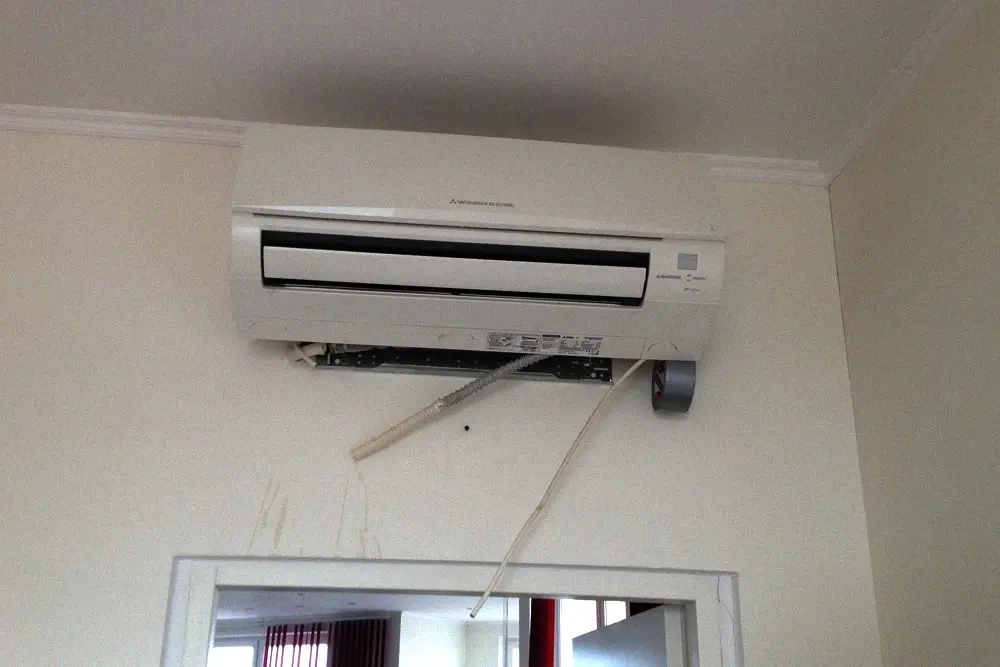
How Does an Air Conditioner Coil Freeze?
During normal cooling, indoor air moves across the evaporator coil. Refrigerant flowing through the coil absorbs heat, while moisture from humid air condenses on the coil and drains into a condensate pan.
Ice begins forming when the coil surface becomes cold enough to freeze that moisture. As ice covers more of the fins, it further restricts airflow. That can create a feedback loop:
- The evaporator becomes too cold.
- Moisture freezes on the coil.
- Ice obstructs additional airflow.
- Less warm air reaches the coil.
- The ice layer grows thicker.
Carrier explains that the two central mechanisms are insufficient warm airflow across the evaporator and excessively low pressure inside the coil, often associated with a refrigerant leak.
The result may be a coil encased in ice, frost on the larger insulated copper line, weak airflow from the registers, poor cooling, unusually long operating cycles, or water around the indoor unit after the ice melts.
Refrigerant Problem or Airflow Problem? Quick Comparison
The following differences are useful clues, but they are not a substitute for testing. A frozen coil can hide the original symptoms, and more than one fault may exist at the same time.
| Diagnostic clue | More consistent with airflow trouble | More consistent with refrigerant trouble |
|---|---|---|
| Air filter | Visibly dirty, collapsed, wet, or incorrectly installed | May appear clean and correctly installed |
| Air at the registers | Weak throughout the home, even before heavy icing develops | Cooling may decline while airflow initially seems normal |
| Visible equipment clues | Blocked returns, closed registers, dirty coil, or blower trouble | Oil residue near a joint or coil, hissing, or a known history of leaks |
| After filter and vent checks | Problem may improve if the restriction was simple and no other fault exists | Icing commonly returns until the leak or charge problem is corrected |
| Confirmation method | Airflow, filter, blower, duct, coil, and static-pressure evaluation | Operating temperatures, pressures, charge indicators, and leak testing |
Source: Diagnostic causes summarized from Trane air-handler troubleshooting guidance and Carrier frozen-coil guidance.
Airflow Problems That Can Freeze an AC
Restricted airflow is one of the most common places to begin troubleshooting because the evaporator needs a continuous supply of warm indoor air.
1. A dirty or overly restrictive filter
A loaded filter makes it more difficult for the blower to pull air through the return system. The evaporator still receives cold refrigerant, but less indoor heat reaches the coil.
The U.S. Department of Energy’s home-cooling guidance identifies a clogged filter as an airflow restriction that reduces an air conditioner’s ability to cool effectively. Filter replacement is therefore a sensible first check when a system has frozen.
However, do not assume that a higher-efficiency or thicker filter is automatically better for every system. The filter must match the dimensions and airflow requirements specified by the equipment manufacturer or HVAC designer.
2. Closed or obstructed supply registers
Closing numerous supply registers does not necessarily redirect air in a helpful way. It can increase resistance in the duct system and reduce total airflow across the evaporator.
Furniture, rugs, curtains, and storage boxes can also block supply or return openings. Every visible register and return should be open and unobstructed unless the system was specifically designed for zoned operation.
3. A dirty evaporator coil
Dust that bypasses the filter can collect on the coil fins. This layer acts as both an airflow restriction and a barrier to heat transfer. Cleaning an accessible filter is a normal homeowner task, but opening an air-handler cabinet or cleaning a delicate evaporator coil is generally better left to a trained technician.
4. Blower or fan problems
A weak blower motor, failed capacitor, damaged wheel, incorrect speed setting, control fault, or obstructed blower assembly can reduce airflow even when the filter looks clean.
Weak air from every register can be an important clue. Nevertheless, the blower should be evaluated after the coil has thawed, because a thick layer of ice can itself make otherwise normal airflow appear weak.
5. Duct restrictions or poor system setup
Crushed flexible ductwork, undersized returns, excessive duct leakage, zoning problems, and an incorrect blower configuration may leave the evaporator chronically short of airflow. These problems may have existed since installation but become more noticeable during hot, humid weather and long cooling cycles.
How Low Refrigerant Can Cause Freezing
Refrigerant does not normally get consumed as an air conditioner operates. The system circulates a specified charge through a closed circuit. If the charge is low, the likely explanations are a leak or an incorrect charge from installation or earlier service.
When refrigerant conditions cause the evaporating pressure to fall too low, part of the coil can operate below the freezing point of water. Condensation then freezes instead of draining away. As the ice spreads, airflow falls and the original refrigerant symptom becomes harder to distinguish from an airflow problem.
Possible leak clues include:
- A history of repeated refrigerant additions
- Gradually declining cooling performance
- Oil residue near tubing connections, valves, or the coil
- Hissing or bubbling near a suspected leak
- Ice returning after confirmed airflow restrictions have been corrected
- Professional measurements showing an undercharged or starved system
None of these clues proves a leak by itself. Pressure changes can also be caused by airflow, outdoor conditions, metering-device problems, or other faults. Refrigerant charge should not be judged from one pressure reading alone.
The EPA advises homeowners to request that technicians locate and repair leaks instead of repeatedly topping off a leaking system. Adding refrigerant without addressing the escape point can create recurring repair costs and continued performance problems.
Other Problems That Can Produce Ice
Airflow restriction and low refrigerant are the main categories, but they are not the only possibilities.
According to Trane’s fan troubleshooting guidance, a malfunctioning indoor blower, low refrigerant charge, or sufficiently cold outdoor conditions can contribute to evaporator freezing.
Other possible causes include:
- A restricted or malfunctioning expansion device
- An improperly positioned or defective temperature sensor
- Control wiring or thermostat problems
- Cooling operation during conditions below the equipment’s approved outdoor range
- Incorrect blower-speed configuration
- A heavily contaminated evaporator coil
- An improperly sized or poorly commissioned system
A heat pump operating in heating mode is a different situation. Light frost on its outdoor coil may be normal temporarily, and the equipment should periodically enter a defrost cycle. A solid coating of ice that does not clear is not normal and requires heat-pump-specific diagnosis.
What Should You Do When the AC Is Frozen?
Continuing to run cooling while the evaporator is frozen can increase stress on the system and may allow meltwater to overflow the drain pan.
Take the following steps:
- Turn cooling off at the thermostat. Do not keep lowering the temperature in an attempt to force more cooling.
- Do not chip, scrape, or break the ice. Tools can puncture tubing or damage the thin coil fins.
- Check for water hazards. If water is approaching electrical equipment, ceilings, or finished surfaces, turn the system off and contact a professional.
- Inspect the return-air filter. Replace it with the correct type and size if it is dirty, wet, damaged, or collapsed.
- Open and clear visible registers and returns. Remove furniture or other objects obstructing airflow.
- Allow the coil to thaw fully. Do not restart cooling while ice remains.
- Schedule service if the system freezes again. Recurring ice indicates that the root cause remains.
Some manufacturer guidance suggests using the indoor fan without cooling to assist thawing. That may be reasonable only if the blower operates normally and there is no overflowing water, electrical concern, or manufacturer prohibition. When in doubt, leave the system off.
How a Technician Separates Airflow and Refrigerant Faults
A reliable diagnosis should consider both sides of the system. Simply seeing ice or connecting gauges is not enough.
| Inspection area | What the technician may evaluate | Why it matters |
|---|---|---|
| Air filter and coil | Filter fit, dirt accumulation, coil condition, and visible obstructions | Reveals common restrictions before charge is evaluated |
| Blower and duct system | Motor operation, speed settings, duct restrictions, and static pressure | Determines whether enough air is crossing the evaporator |
| Refrigeration circuit | Temperatures, pressures, superheat or subcooling as applicable, and equipment data | Helps distinguish undercharge from airflow or metering faults |
| Leak evaluation | Joints, valves, tubing, coils, oil traces, and appropriate leak-testing methods | Identifies why refrigerant was lost before charging |
| Controls and operating conditions | Sensors, thermostat calls, outdoor temperature, and equipment configuration | Finds faults that can imitate airflow or charge problems |
Source: The diagnostic categories reflect Trane’s air-handler troubleshooting sequence, which includes airflow, coil, thermostat, refrigerant-level, and leak checks.
Why You Should Not Add Refrigerant as a Guess
A frozen coil is not proof that an air conditioner is low on refrigerant. If restricted airflow is actually responsible, adding refrigerant will not repair the restriction and could leave the system incorrectly charged.
The refrigerant must also match the equipment nameplate and manufacturer requirements. R22, R410A, R32, R454B, and other refrigerants are not interchangeable, and different refrigerants must not be mixed in the system. Any proposed retrofit requires equipment-specific engineering and service guidance.
Under current EPA Section 608 technician-certification requirements, technicians who service stationary equipment in a way that could release regulated refrigerants must hold the appropriate certification. Refrigerant recovery, leak repair, evacuation, and charging are therefore professional service procedures—not normal homeowner troubleshooting.
If a qualified technician confirms that the system needs its specified refrigerant after the underlying fault is repaired, eligible purchasers can review Freon Shop’s refrigerant collection. Product availability does not establish compatibility; the equipment nameplate and manufacturer service information control the selection.
How to Help Prevent Future Freeze-Ups
A practical prevention routine includes:
- Check the filter regularly and replace it when dirty.
- Use the manufacturer-recommended filter type and dimensions.
- Keep supply registers and return grilles open and unobstructed.
- Do not operate cooling outside the manufacturer’s approved conditions.
- Watch for gradually weakening airflow or longer cooling cycles.
- Keep the indoor unit and drain area clear.
- Arrange maintenance when the blower becomes noisy or airflow changes.
- Ask for leak diagnosis if refrigerant has been added more than once.
- Have recurring ice investigated instead of repeatedly thawing and restarting the system.
Preventive maintenance cannot stop every component failure, but it can identify a loaded filter, dirty coil, blower problem, or developing leak before the evaporator becomes a block of ice.
Frequently Asked Questions
Does a frozen AC always mean low refrigerant?
No. Restricted airflow from a dirty filter, blocked return, dirty evaporator, or blower fault can cause the same result. Refrigerant charge should be evaluated only after airflow and operating conditions are considered.
Will changing the filter fix a frozen air conditioner?
It may fix a simple filter restriction, but the coil must thaw before cooling is restarted. If the system freezes again, there is another restriction, mechanical fault, control problem, or refrigerant-circuit issue that needs diagnosis.
Can refrigerant disappear without a leak?
Refrigerant does not normally get used up during operation. A low charge generally indicates leakage or that the correct charge was never installed.
Can I run the AC while ice is on the refrigerant line?
No. Turn cooling off and allow the system to thaw. Ice on the visible line often means the indoor evaporator is also frozen or operating abnormally.
Should I pour warm water over the frozen coil?
No. Do not pour water on the equipment or use tools, high heat, or an open flame. Water can reach electrical components, and rapid or forceful thawing can damage the coil.
Why does the AC blow less air as the ice gets worse?
Ice fills the spaces between evaporator fins and blocks the air path. The growing restriction reduces airflow further, which can accelerate freezing.
Can a frozen coil damage the compressor?
Continued operation can place the refrigeration system under abnormal conditions and prevent proper heat transfer. Shutting off cooling promptly reduces the risk of a more serious repair.
The Bottom Line
An air conditioner freezes when the evaporator becomes too cold for the amount of heat reaching it. Restricted airflow and refrigerant-circuit problems are the two leading explanations, but the visible ice cannot reliably identify which one is responsible.
Start with safe checks: turn cooling off, let the coil thaw, inspect the filter, and clear the registers and returns. If the ice returns—or if you notice oil residue, water leakage, blower trouble, or repeated refrigerant additions—have a qualified HVAC technician test airflow, controls, operating conditions, refrigerant charge, and the system for leaks before any refrigerant is added.