
The safest way to find out what refrigerant your air conditioner uses is to read its factory data plate—often called the nameplate—without opening the refrigerant system. On a central split system, start at the outdoor condenser. Look for a metal or durable printed label that lists “Refrigerant,” “Factory Charge,” or an R-number such as R-22, R-410A, R-32, or R-454B.
Do not guess based on the age of the house, the color of a refrigerant cylinder, or a neighbor’s equipment. And do not attach gauges, loosen caps, cut lines, or add refrigerant just to identify it. The U.S. EPA says that connecting gauges, adding or removing refrigerant, and similar activities that could open the refrigerant circuit require an appropriately certified technician. EPA Section 608 certification requirements explain those limits.
The quick answer: read the equipment label
For most homeowners, the label is the answer. It is installed by the manufacturer and is more trustworthy than an online age chart or a previous owner’s memory.
On the label, you may see:
REFRIGERANT: R-410AFACTORY CHARGE: 8 lb 4 ozR-22R-32R-454B- A blend designation such as
R-407C
The listed refrigerant is the one the equipment was designed to use. The factory charge tells a technician how much refrigerant was installed at the factory before the line set and indoor coil were connected. It is not automatically the final amount needed after installation; line-set length and system design can affect the total charge.
For central air conditioners and heat pumps, federal test-procedure materials recognize refrigerant information on the outdoor unit’s nameplate, with indoor-unit labeling used in certain configurations. That makes the outdoor cabinet the practical first place to inspect. See the U.S. Department of Energy’s central AC and heat-pump test procedure materials.
Where to look for the AC refrigerant label
Turn the system off at the thermostat if you will be working near the equipment. You do not need to remove panels or touch wiring to read the label.
Central air conditioner or heat pump
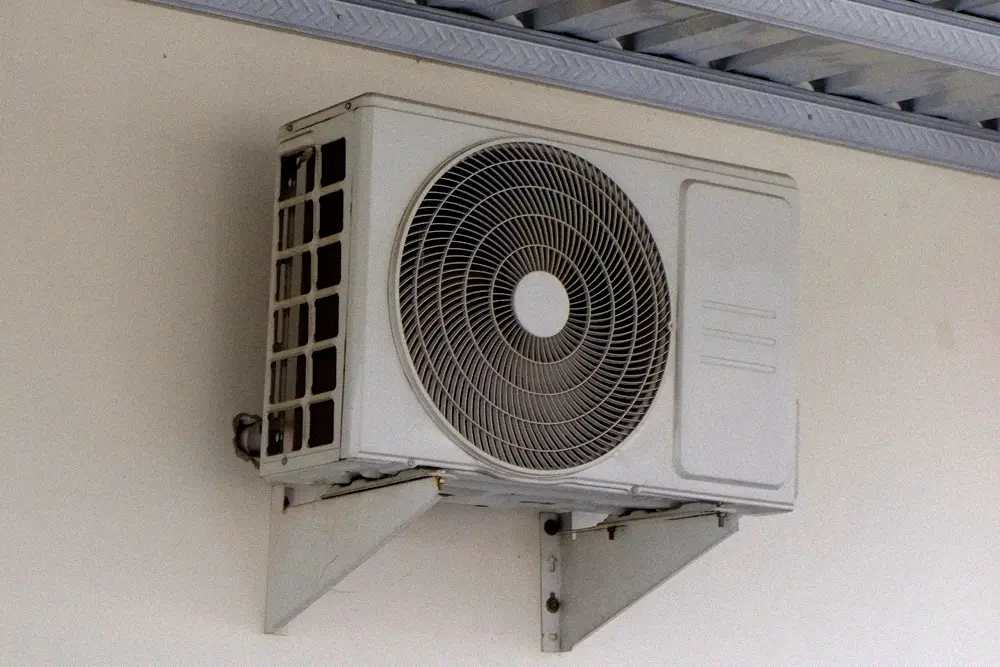
Check the outdoor unit—the metal cabinet with a fan on top or side. The nameplate is commonly placed:
- On a side panel
- Near the electrical disconnect or power-entry area
- Behind a protective access door
- Near the refrigerant-line connections
Use a flashlight and take a clear photo. Dirt, sun fading, or landscaping can make the label hard to read, but a photo can be enlarged later or sent to your HVAC company.
Ductless mini-split
Look at the outdoor condenser first. The indoor wall unit may show a model number, but the outdoor unit’s label is usually the better source for refrigerant type and charge data. Do not disconnect pre-charged line sets or remove covers to investigate; the EPA specifically identifies connecting or disconnecting pre-charged lines as work requiring Section 608 certification. EPA homeowner guidance is clear on this point.
Window, portable, or packaged air conditioner
The label may be on the back, side, underside, or inside a service-access area. Read only what is visible from the exterior. If the unit is in a window, do not pull it out or disassemble it to search for a label.
What the R-number means
An R-number identifies the refrigerant used in the sealed cooling circuit. It does not tell you that another refrigerant is interchangeable.
| Label you may see | What it generally indicates | What you should do |
|---|---|---|
| R-22 | Older HCFC refrigerant used in many legacy residential systems | Confirm the label; ask a technician about repair, leak diagnosis, or replacement options. |
| R-410A | HFC refrigerant used in many newer residential systems | Use only the specified refrigerant and equipment procedures. |
| R-32 | A lower-GWP refrigerant used in some newer equipment | Use a technician trained for the equipment and refrigerant. |
| R-454B | A newer A2L refrigerant used in certain new residential systems | Follow the equipment manufacturer’s instructions and use properly trained service personnel. |
| R-407C or another blend | A blended refrigerant used in specific equipment or retrofit applications | Do not assume it can replace another refrigerant. Verify the exact equipment documentation. |
Source note: Refrigerant identity, allowable use, and handling requirements are system-specific. The EPA’s consumer guidance advises homeowners to use technicians trained for the refrigerant in their equipment.
Can I tell by the age of my AC?
Age can provide a clue, but it is not proof. Equipment may have been replaced while the home stayed the same. A unit could have been repaired, retrofitted under a manufacturer-approved process, or paired with other components at a different time.
For example, an older system may have an R-22 label, while many later systems use R-410A. But the nameplate—not the installation year—is what should guide your next conversation with a contractor.
If the label is missing or unreadable, collect these details instead:
- Outdoor-unit brand
- Model number
- Serial number
- A clear photo of all visible labels
- Any prior service invoice or installation paperwork
An HVAC contractor can use this information to identify the approved refrigerant and check whether the indoor and outdoor components belong to a matched system.
What not to do when checking refrigerant
Curiosity is understandable, but refrigerant identification should stay non-invasive. Avoid these common mistakes:
Do not attach gauges “just to check”
Gauge connections are not a homeowner diagnostic step. They can affect the sealed circuit, introduce contamination, cause a release, or give misleading readings when interpreted without the full system context.
Do not add a “universal” refrigerant
There is no universal refrigerant for home air conditioners. Refrigerants have different pressures, oils, controls, safety properties, and equipment requirements. Never mix refrigerants or top off a system with a different R-number.
Do not rely on cylinder color
Cylinder colors are not a safe identification method. Labels, not paint colors, identify refrigerant products.
Do not assume low cooling means low refrigerant
Restricted airflow, dirty coils, thermostat issues, electrical faults, duct problems, and compressor issues can all affect cooling. A qualified technician should diagnose the cause before recommending a charge.
The EPA recommends that a leak be located and repaired instead of simply “topping off” a leaking system; that approach can reduce emissions, energy use, and repeat repair costs. EPA homeowner guidance provides the same advice.
Why a certified technician matters
Refrigerant work is more than adding refrigerant from a cylinder. Proper service can involve leak detection, recovery equipment, evacuation, weighing the charge, checking airflow, confirming manufacturer specifications, and testing operation.
Under EPA rules, technicians who maintain, service, repair, or dispose of equipment that could release refrigerant must be certified. The EPA also restricts sales of refrigerant for stationary air-conditioning equipment to Section 608-certified technicians or qualifying employers. Read the EPA refrigerant sales restriction for the current rule.
When you schedule service, tell the contractor the R-number on your nameplate and ask:
- Is this the refrigerant specified on my unit’s label?
- Do you see evidence of a leak?
- Will you diagnose and repair the leak before adding refrigerant?
- Are the indoor and outdoor components compatible?
- Does this system require a manufacturer-approved repair, retrofit, or replacement plan?
When to call for help right away
Call an HVAC professional rather than investigating further if you notice:
- Ice on refrigerant lines or the indoor coil
- Hissing sounds near the equipment
- Oily residue around refrigerant-line connections
- Cooling that has suddenly dropped off
- A damaged, missing, or unreadable label
- An unfamiliar R-number or any indication the system contains a mildly flammable refrigerant
A technician can identify the refrigerant, check the system safely, and explain whether repair makes sense. Freon Shop offers common refrigerant categories for qualified buyers, but the label and the technician’s diagnosis—not a general product list—must determine what belongs in a specific system.
FAQ
Is R-22 the same as Freon?
“Freon” is often used casually to mean refrigerant, but it has also been a brand name. R-22 is one specific refrigerant; it is not a catch-all name for every AC refrigerant.
Can I put R-410A in an R-22 air conditioner?
No. Do not substitute R-410A for R-22 or mix the two. The equipment, lubricant, pressures, components, and procedures differ. A system-specific plan from a qualified technician is required.
Is my refrigerant type printed on the thermostat?
Usually no. A thermostat may identify the control system or model, but it normally does not identify the refrigerant in the outdoor refrigeration circuit.
Can a technician identify the refrigerant from the serial number?
Often, yes—especially when the manufacturer, model number, and serial number are available. However, the physical nameplate and complete equipment information are still valuable, particularly if components have been changed.
Should I buy refrigerant before the technician arrives?
Usually, no. First obtain a diagnosis and confirm the exact refrigerant, charge method, and repair plan. Stationary-AC refrigerant purchases are regulated, and the wrong refrigerant can create safety, performance, and compatibility problems.
Your AC’s factory nameplate is the safest place to learn what refrigerant it uses. Photograph the label, record the R-number and model number, and leave any opening, charging, recovery, or service work to a Section 608-certified HVAC technician. That small bit of information helps the technician diagnose the system correctly—and helps you avoid a costly wrong-refrigerant mistake.