
U.S. regulatory information checked September 16, 2026.
The U.S. residential air conditioner refrigerant timeline follows three broad stages: widespread R22 use, the transition toward R410A, and the newer move toward lower-global-warming-potential refrigerants such as R32 and R454B.
These stages overlap. A refrigerant did not disappear from every home when a regulation changed, and a recently installed air conditioner does not necessarily contain the newest refrigerant.
The essential distinction is between manufacturing refrigerant, installing new equipment, and repairing an existing system. Each can be governed by different requirements.
This guide focuses primarily on U.S. residential central air conditioners and heat pumps. Window units, portable air conditioners, and variable refrigerant flow equipment can have different regulatory provisions.
The Residential AC Refrigerant Timeline at a Glance
The dates below identify important U.S. policy milestones—not universal installation dates or instructions to change an existing system’s refrigerant.
| Year or period | Major development | Meaning for homeowners |
|---|---|---|
| 1990 | Clean Air Act amendments added Title VI ozone-protection provisions. | Established the framework for managing ozone-depleting refrigerants. |
| 1992–1994 | EPA implemented major refrigerant-management and alternative-evaluation programs. | Refrigerant handling and substitute selection became more closely regulated. |
| 1990s–2000s | R22 remained common while non-ozone-depleting alternatives gained ground. | Equipment from this period cannot be identified by age alone. |
| 2010 | New R22 production and imports were restricted to servicing pre-2010 equipment; manufacture and import of R22-charged units were prohibited. | The new-equipment market moved further toward alternatives such as R410A. |
| 2020 | New R22 production and imports ended. Separately, the AIM Act established an HFC phasedown framework. | Existing R22 equipment could still be serviced; a different transition began for HFCs. |
| 2022 | The HFC allowance program began with a 10% reduction from baseline. | This was a supply-side phasedown, not a replacement deadline for home AC systems. |
| 2024 | HFC production and consumption caps moved to 60% of baseline. | The reduction applied across regulated HFCs on a weighted basis. |
| 2025 | The 700-GWP threshold drove the transition in covered new residential AC systems, with inventory provisions. | R32 and R454B became increasingly important in newly designed equipment. |
| 2026 | EPA removed the installation deadline for qualifying systems whose specified components were manufactured or imported before 2025. | Some qualifying R410A inventory can still be installed; existing-system service remains distinct. |
The historical milestones follow the EPA’s ozone-protection timeline. The later milestones follow its HFC phasedown explanation and current Technology Transitions sector restrictions.
1990–2009: Ozone Protection Reshapes Residential Cooling
R22 was widely used in residential central air conditioners and heat pumps during this period. It belongs to the hydrochlorofluorocarbon, or HCFC, family.
The environmental concern was ozone depletion. The 1990 Clean Air Act amendments established the U.S. framework that supported the gradual transition away from ozone-depleting substances.
This was not an instruction for every household to replace its air conditioner immediately. The transition unfolded through production restrictions, equipment changes, refrigerant-management practices, and the evaluation of alternatives.
It is also misleading to describe all residential AC history as a simple progression from R12 to R22. Different applications followed different paths. Automotive air conditioning, household refrigerators, large chillers, and residential central systems should not be combined into one universal timeline.
For the home central-AC market, the important story was the large installed base of R22 equipment and the gradual introduction of non-ozone-depleting alternatives.
2010: A Major Turning Point for R22
January 1, 2010, marked a significant restriction on the role of newly produced R22.
The EPA’s HCFC phaseout schedule explains that production and import of R22 were limited to use in equipment manufactured before that date.
Existing systems were not required to stop operating. Instead, the rule separated the needs of the existing equipment base from the direction of new equipment.
That distinction explains why a homeowner could continue maintaining an older R22 system while new-system offerings increasingly used other refrigerants.
When discussing R22 refrigerant today, the relevant residential context is compatible legacy equipment—not a recommendation to install new R22 technology.
An installation date after 2010 does not settle every identification question. Replacement components, stored equipment, and service history can complicate a system’s timeline.
The 2010s: R410A Becomes Familiar in Residential Equipment
R410A refrigerant became common in residential central air conditioners and heat pumps as manufacturers moved away from R22.
The environmental improvement concerned ozone depletion. However, “does not deplete ozone” and “has a low climate impact” are different claims.
R410A addressed the first issue but later became part of the discussion about reducing the climate impact of HFC refrigerants.
The transition also involved equipment design. An R22 system did not become an R410A system simply because the industry adopted a newer refrigerant.
For homeowners, this decade created a large population of R410A equipment that remains relevant to service work in 2026. A restriction affecting future equipment does not erase that installed base or automatically make every repair inappropriate.
2020: Two Different Refrigerant Milestones
New R22 Production and Imports End
The R22 phaseout reached another major milestone on January 1, 2020.
According to the EPA’s homeowner guidance, existing R22 equipment can continue to be serviced using available previously produced or reclaimed material.
The date did not mean that possessing R22 became illegal, that every cylinder became unusable, or that all R22 air conditioners had to be removed.
A repair decision still depends on the actual fault, equipment condition, compatible parts, and the complete cost of the work.
The AIM Act Establishes an HFC Phasedown
Separately, the American Innovation and Manufacturing Act of 2020 created the framework for reducing HFC production and consumption.
This was a different environmental program from the ozone-driven R22 phaseout.
The distinction matters because R410A is an HFC blend, while R22 is an HCFC. Their regulatory histories should not be treated as interchangeable.
2022–2024: HFC Supply Reductions Take Effect
The HFC allowance program began in 2022. The initial reduction was 10% below the applicable historical baselines, followed by a cap of 60% of baseline beginning in 2024.
These figures describe the regulated HFC program. They do not mean that every refrigerant experienced an identical reduction in pounds, or that every contractor received 40% less R410A.
The program uses weighted quantities associated with the refrigerants’ exchange values.
For homeowners, the practical lesson is to separate supply policy from equipment service. A reduced national allowance does not establish the condition of an individual air conditioner or prove that replacement is immediately necessary.
Likewise, it does not support a guaranteed prediction about the price of a particular cylinder or repair.
2025: Lower-GWP Refrigerants Become Central to New Equipment
The Technology Transitions rules introduced a 700-GWP threshold for covered new residential and light-commercial AC and heat-pump systems. The restriction applies to refrigerants at or above that threshold, subject to the relevant provisions.
Two important refrigerants in the newer equipment generation are R32 refrigerant and R454B refrigerant.
The EPA’s residential AC substitute listings identify these as A2L refrigerants acceptable in applicable new equipment subject to use conditions.
They are not interchangeable with each other, and neither should be added to an existing R410A system as an informal conversion.
The Transition Involves More Than the Refrigerant
Newer refrigerants come with equipment-specific installation and service requirements.
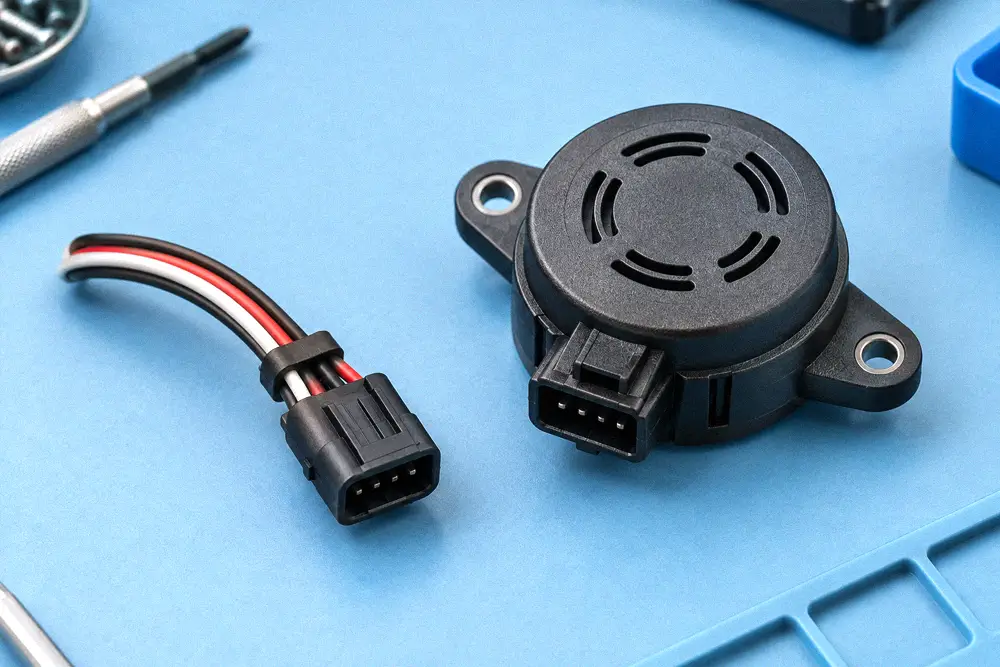
Depending on the equipment design, these can include refrigerant detection and mitigation provisions. For example, Danfoss’s A2L sensor information describes sensors developed for R32 and R454B applications.
A technician must follow the actual equipment instructions. A generic sensor illustration or the presence of an A2L label is not enough to establish compatibility or determine the correct service procedure.
2026: Why the R410A Installation Story Needs an Update
Older transition summaries often describe January 1, 2026, as the final installation deadline for qualifying pre-2025 R410A residential equipment.
That description is no longer complete.
The EPA’s May 2026 final rule, effective July 27, 2026, removed that deadline for residential and light-commercial AC and heat-pump systems whose specified components were domestically manufactured or imported before January 1, 2025.
The exception is conditional. It is not blanket permission to assemble new R410A systems from any components available in 2026.
Contractors must verify component eligibility and distinguish an existing-system repair from a new installation. Applicable state and local requirements also need checking.
This means a system installed in 2026 could still use R410A under the qualifying inventory provision. Its installation year alone does not identify its refrigerant.
What the Timeline Means for Your Existing Air Conditioner
Use the timeline to understand the equipment’s context—not to select its refrigerant.
For a particular home, establish:
- The refrigerant shown on the equipment nameplate.
- Whether the indoor and outdoor components are properly matched.
- Whether previous service changed components or involved a documented retrofit.
- Whether the proposed work is a repair or a new installation.
- Which manufacturer instructions and current requirements apply.
Freon Shop’s guide to refrigerants by air conditioner age explains how age can narrow the possibilities while leaving the nameplate as the decisive starting point.
Before approving a major repair, ask the contractor to identify the actual failure and explain the complete repair scope. A historical phaseout date is relevant context, but it is not a diagnosis.
Refrigerant handling should be performed by a qualified HVAC technician with the appropriate certification.
Frequently Asked Questions
Did every air conditioner made before 2010 use R22?
No. R22 was common, but alternatives were already available. Check the equipment label rather than treating 2010 as a universal dividing line.
Was R22 completely banned in 2020?
New production and imports ended. Existing equipment could still operate and receive compliant service using available permitted supplies.
Is R410A illegal to use in an existing AC in 2026?
No. Existing-system use and service are distinct from restrictions on new installations. The correct repair must still meet equipment and regulatory requirements.
Do all air conditioners installed in 2026 use R32 or R454B?
No. Qualifying pre-2025 R410A components may still be installed under the updated federal inventory provision. Other equipment categories also have their own rules.
Can an older system be updated by changing only its refrigerant?
Do not assume so. A newer refrigerant is not a universal replacement. Any conversion requires a specifically supported application, compatible equipment, and professional procedures.
Does a newer refrigerant automatically mean lower electricity bills?
No. Refrigerant choice is only one part of system design. Equipment efficiency, sizing, installation quality, airflow, controls, and maintenance also affect electricity consumption.
Understanding the Timeline Without Misreading It
From 1990 through 2026, U.S. residential cooling moved from ozone-protection measures toward lower-climate-impact refrigerants and updated equipment designs.
The transition happened gradually, with different rules for refrigerant supply, new installations, and existing-system service.
For your own air conditioner, the most useful information remains specific: its nameplate, matched components, service history, condition, and the requirements that apply to the work being proposed.