
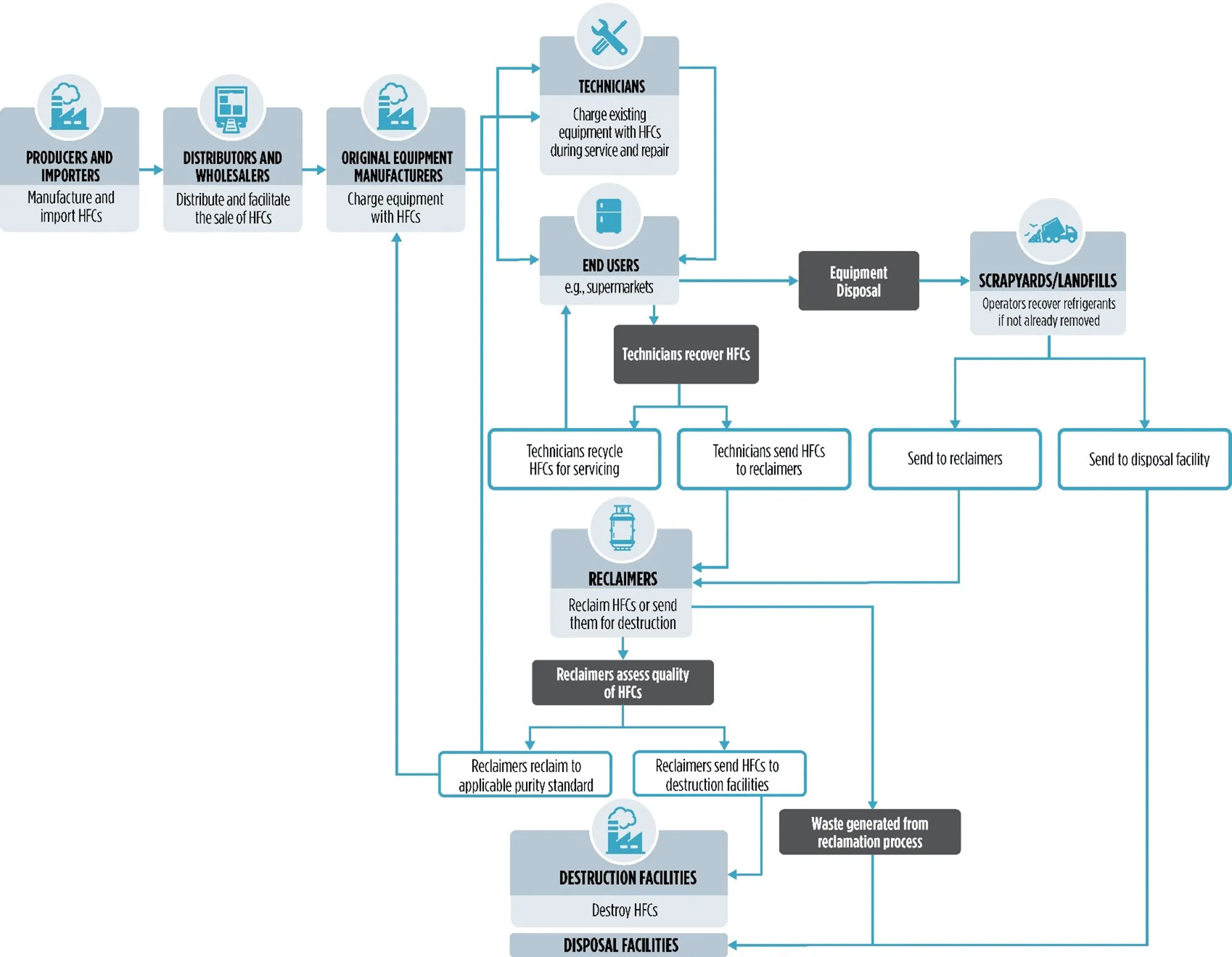
The phrase “refrigerant shortage” can be misleading. It does not always mean that a refrigerant has disappeared nationwide or that every distributor is out of stock. In practice, technicians may encounter temporary regional shortages, seasonal distributor constraints, delayed shipments, manufacturer-transition bottlenecks, or tightening availability for a specific refrigerant or cylinder size.
At the same time, the long-term supply environment is changing. The United States is reducing the production and consumption of hydrofluorocarbons under the American Innovation and Manufacturing Act. The EPA’s HFC phasedown schedule calls for an 85% reduction from historical baseline levels by 2036.
That does not mean every refrigerant will lose 85% of its physical supply or that existing equipment can no longer be repaired. However, it does mean HVAC businesses should expect the market to keep changing—and plan accordingly.
Is There Really a Refrigerant Shortage?
There is no single shortage affecting every refrigerant, supplier, and part of the United States equally.
A contractor may find R-410A readily available in one market while another distributor temporarily limits purchases. R-454B equipment production may create strong demand for specific cylinders, components, sensors, or compatible tools. R-22 availability follows a different pattern because new domestic production and import ended in 2020.
Therefore, technicians should ask a more precise question:
Which refrigerant is tightening, in which market, for how long, and why?
The answer may involve regulation, seasonal demand, logistics, local distributor inventory, equipment transitions, reclamation capacity, or an unexpected service surge.
| Supply Factor | What It Means | Possible Technician Impact |
|---|---|---|
| HFC allowance reductions | Production and import allowances are reduced in scheduled steps based on exchange value. | Greater price and availability pressure may develop around higher-GWP refrigerants. |
| Equipment transition | Manufacturers and distributors must support both legacy systems and newer lower-GWP equipment. | Contractors may need additional refrigerants, tools, training, and replacement components. |
| Seasonal demand | Heat waves and peak cooling season can rapidly increase service calls. | Local distributors may experience temporary shortages or longer fulfillment times. |
| Legacy refrigerant demand | Older equipment remains in service even after new production or installation rules change. | Recovered, reclaimed, and previously produced refrigerant becomes increasingly important. |
| Distribution or logistics problems | Transportation delays, packaging constraints, or uneven regional inventories interrupt supply. | A product may be available nationally but temporarily difficult to obtain locally. |
| Refrigerant losses or contamination | Leaks, mixing, venting, and poor cylinder handling remove usable refrigerant from circulation. | Contractors purchase more virgin or reclaimed product than necessary. |
Source note: Regulatory information is based on the EPA HFC phasedown program and its refrigerant management rules. Local market effects are operational examples and may vary by region.
Why the HFC Phasedown Matters
The AIM Act controls the amount of regulated HFCs newly added to the U.S. market through production and imports, minus exports and destruction.
Allowances are calculated using each HFC’s exchange value, which corresponds to its global warming potential. Consequently, this is not a simple pound-for-pound cut applied equally to R-410A, R-134a, R-404A, R-32, and every other HFC.
Higher-GWP refrigerants consume more allowance value per pound. This gives producers and importers a reason to shift the market toward lower-GWP alternatives while continuing to address service demand for installed equipment.
| Compliance Period | Production and Consumption Cap | Planning Significance |
|---|---|---|
| 2024–2028 | 60% of baseline | Current allowance level; contractors are already working within a reduced HFC market. |
| 2029–2033 | 30% of baseline | The next major step creates a strong reason to improve forecasting, recovery, and customer planning before 2029. |
| 2034–2035 | 20% of baseline | Service supply is likely to depend more heavily on lower-GWP products and reclamation. |
| 2036 and after | 15% of baseline | The statutory target represents an 85% phasedown from the historical baseline. |
Source note: Percentages are from the EPA’s official HFC allowance schedule. The caps are measured in exchange-value-equivalent terms, not as identical physical-pound reductions for every refrigerant.
The 2029 step is particularly important. The cap moves from 60% to 30% of baseline. Contractors do not need to panic or accumulate excessive inventory, but they should understand which refrigerants dominate their service calls well before that change takes effect.
Existing R-410A Systems Can Still Be Serviced
The HFC phasedown does not automatically ban the continued operation or repair of existing R-410A equipment.
EPA guidance states that consumers may continue using existing equipment until the end of its useful life. Technology-transition rules primarily direct new products and systems toward refrigerants with lower global warming potential.
A May 2026 EPA final rule also removed the January 1, 2026 installation deadline for certain residential and light-commercial systems manufactured or imported before January 1, 2025. That qualifying pre-2025 inventory may continue to be installed while supplies remain, according to the EPA’s current Technology Transitions rule materials.
This flexibility does not reverse the broader transition. Newer equipment is increasingly designed for refrigerants such as R-32 or R-454B. These products are not drop-in replacements for R-410A. Technicians must follow the equipment manufacturer’s refrigerant specification, charging procedure, safety requirements, and approved service practices.
Why R-22 Availability Is Different
R-22 is an HCFC, not an HFC. Its U.S. production and import phaseout follows a different regulatory program.
New R-22 production and import ended in 2020. Existing R-22 systems can still be serviced, but the service market relies on previously produced, recovered, recycled, or reclaimed material. The EPA’s guidance for technicians specifically notes that R-22 price and availability may change over time.
There is no EPA requirement forcing an owner to convert or immediately replace an operating R-22 system. Nevertheless, contractors should help customers compare:
- The extent and repairability of the leak
- The condition and expected remaining life of the equipment
- Current refrigerant and component costs
- System efficiency
- The cost and benefit of replacement
- The risk of another major repair
The correct recommendation depends on the equipment—not on a blanket claim that R-22 is “illegal” or completely unavailable.
How HVAC Technicians Should Plan Ahead
Planning ahead means building a reliable service process. It does not mean hoarding refrigerant or purchasing quantities that cannot be stored, tracked, or used responsibly.
1. Audit the Installed Equipment Base
Review recent service records and identify how many customer systems use R-22, R-410A, R-134a, R-404A, R-407C, R-448A, R-449A, R-32, R-454B, or other refrigerants.
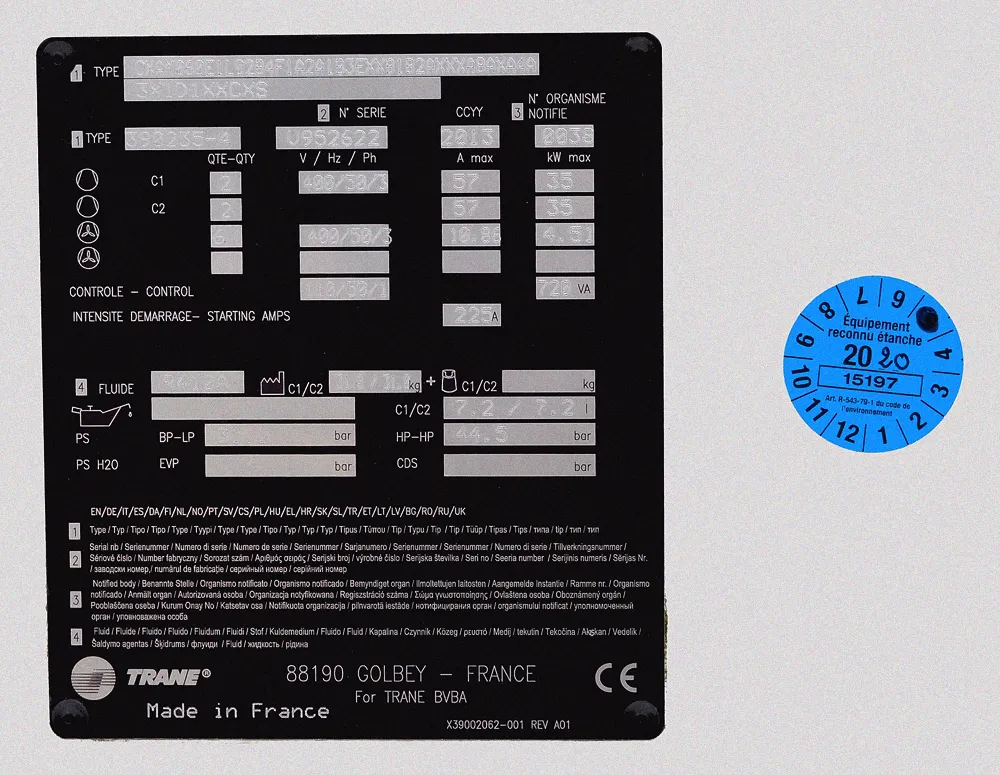
Record the equipment type, refrigerant, factory charge, estimated operating condition, leak history, and likely remaining service life. Nameplates and manufacturer literature should take priority over assumptions based on the unit’s age.
2. Forecast Demand From Actual Service Data
Compare refrigerant usage by month, system category, and customer type. A contractor servicing supermarkets has a different demand profile from a company focused on residential split systems.
Include normal service demand, anticipated seasonal peaks, known retrofit projects, and a reasonable emergency reserve. Avoid using internet rumors as the basis for a large purchase.
3. Set Responsible Reorder Points
Define minimum and target quantities for refrigerants that appear frequently in your service records. Reorder points should account for supplier lead time, historical usage, storage capacity, cylinder management, and available working capital.
After confirming the exact refrigerant required, HVAC businesses can review the Freon Shop refrigerant collection. Product suitability must always be verified against the equipment nameplate, manufacturer documentation, and applicable regulations before purchase.
4. Improve Recovery and Segregation
Recovered refrigerant is valuable only when it is handled properly. Use dedicated, correctly labeled recovery cylinders and avoid mixing refrigerants. Contaminated mixtures may be costly or impractical to reclaim.
Under EPA rules, recovered refrigerant generally cannot be sold or transferred to a new owner for reuse unless it has been processed by an EPA-certified reclaimer. The EPA explains that reclamation reduces demand for newly produced HFCs and helps maintain usable service supply.
5. Build a Reclamation Partnership
Contractors should know where recovered material will go before cylinders accumulate. Establish a relationship with a certified reclaimer or an authorized collection program, and document outgoing refrigerant by type and weight.
Reclaimed refrigerant is reprocessed to an established purity specification. It is not simply refrigerant removed from one unit and casually resold for another customer’s equipment.
6. Reduce Preventable Refrigerant Losses
Leak detection and repair can be more valuable than purchasing extra cylinders. A leaking system creates repeated service costs, increases customer frustration, and consumes material that could otherwise remain in circulation.
EPA’s HFC management regulations include leak-repair, reclamation, recovery, reporting, and labeling provisions for specified equipment and activities. Applicability depends on the refrigerant, equipment type, charge size, and regulated activity; technicians should not assume every requirement applies identically to every residential or commercial appliance.
7. Prepare for A2L Equipment
R-32 and R-454B are classified as A2L refrigerants. Their lower flammability classification introduces service procedures and equipment considerations that differ from traditional A1 refrigerants.
Review training needs, recovery equipment, vacuum pumps, leak detectors, ventilation practices, ignition-source controls, cylinder handling, and manufacturer instructions. The AHRI Safe Refrigerant Transition Task Force provides technician resources covering A2L tools, detectors, installation, and servicing.
Training should happen before a technician encounters the new equipment during an emergency call.
8. Create a Refrigerant Management Policy
A written policy should cover purchasing authorization, cylinder identification, storage, technician disbursement, recovery, return, reclamation, and record retention.
AHRI recommends a refrigerant inventory program with cradle-to-grave recordkeeping, audit tracking, labeling, and documented handling procedures in its equipment-owner compliance guidance.
What HVAC Businesses Should Avoid
Planning ahead should reduce risk—not create new safety, financial, or compliance problems.
Avoid:
- Buying excessive quantities without a demand forecast
- Using an unapproved substitute because the specified refrigerant is temporarily unavailable
- Mixing recovered refrigerants in the same cylinder
- Charging a system without first locating and evaluating the leak
- Assuming R-32, R-454B, and R-410A are interchangeable
- Relying on damaged, unmarked, or unknown cylinders
- Promising customers that a specific refrigerant will always remain available
- Telling customers that an operating legacy system is automatically illegal
- Ignoring state rules, fire codes, storage limits, or manufacturer requirements
Excess inventory ties up capital and introduces storage, security, tracking, and cylinder-management obligations. A documented purchasing plan is more useful than reactive stockpiling.
Frequently Asked Questions
Is there a nationwide refrigerant shortage?
Not necessarily. Some refrigerants may experience local, seasonal, or temporary supply constraints even when material remains available elsewhere. The exact refrigerant, cylinder size, location, and supplier must be considered.
Will R-410A disappear in 2029?
No scheduled rule says that R-410A must disappear in 2029. However, the overall HFC production and consumption cap falls from 60% to 30% of baseline, which may increase pressure on higher-GWP refrigerant supply and pricing.
Can existing R-410A air conditioners still be repaired?
Yes. Existing equipment can continue operating and can generally be serviced. Always follow EPA requirements, manufacturer procedures, and refrigerant-handling rules.
Is R-454B a drop-in replacement for R-410A?
No. R-454B must be used only in equipment designed and approved for it. It has different properties and an A2L safety classification.
Is R-22 illegal to use?
No. Existing R-22 equipment may still be serviced. New domestic production and import ended in 2020, so servicing depends on previously produced, recovered, recycled, or reclaimed R-22.
Can recovered refrigerant be used for another customer?
Recovered or recycled refrigerant generally cannot be sold to a new owner for reuse unless it has been reclaimed by an EPA-certified reclaimer. Same-owner reuse is treated differently under EPA rules.
Should contractors buy several years of refrigerant now?
Usually not without a carefully documented need. Contractors should forecast demand, establish appropriate reserves, track cylinders, reduce leaks, and maintain supplier and reclamation relationships instead of speculating.
What is the most important step before ordering refrigerant?
Verify the refrigerant designation and required charge using the equipment nameplate and manufacturer documentation. Never select refrigerant based only on equipment age, appearance, or operating pressure.
Refrigerant availability will continue to evolve as HFC allowances decline, lower-GWP equipment enters the market, and older systems remain in service. Temporary supply disruptions are possible, but they should not automatically be described as a universal national shortage.
The strongest response is disciplined planning: understand the installed equipment base, forecast from real service data, reduce leaks, recover refrigerant correctly, work with qualified reclaimers, prepare technicians for A2L systems, and give customers accurate repair-versus-replacement guidance.
Contractors that begin this work before the 2029 allowance step will be better positioned to manage changing supply conditions without unsafe substitutions, unnecessary purchasing, or last-minute disruption.