
Published September 9, 2026
Modern refrigerants can be more environmentally friendly because they are designed to reduce ozone depletion, lower the climate impact of accidental releases, and work in equipment engineered for improved efficiency and tighter refrigerant management.
However, “modern” does not automatically mean environmentally harmless. A refrigerant’s real impact depends on several factors: ozone depletion potential, global warming potential, the amount of refrigerant in the system, leakage over its service life, equipment energy consumption, manufacturing effects, and what happens to the refrigerant when the equipment is repaired or retired.
The most sustainable solution is therefore not simply the fluid with the lowest number on a specification sheet. It is a properly selected refrigerant operating in efficient, leak-tight equipment and recovered responsibly at the end of its useful life.
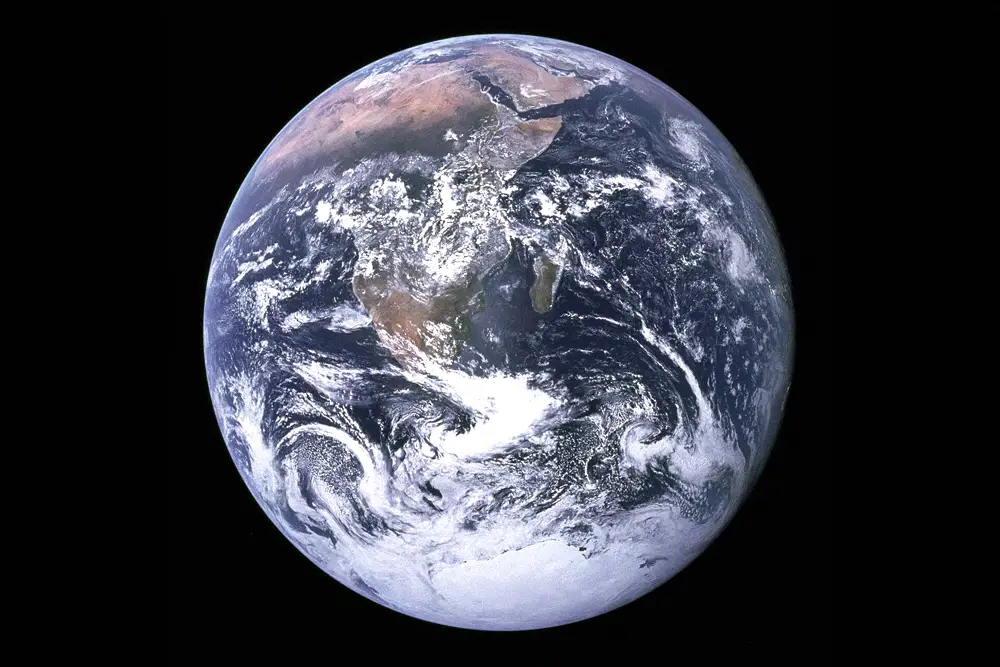
What Does “Environmentally Friendly” Mean for a Refrigerant?
There is no single environmental score that fully describes a refrigerant. Several separate measurements and operating factors must be considered.
| Environmental Factor | What It Measures | Why It Matters |
|---|---|---|
| Ozone depletion potential | A substance’s potential to damage stratospheric ozone relative to a reference chemical | Lower or zero ODP helps protect the ozone layer from chlorine- and bromine-related damage. |
| Global warming potential | The heat-trapping effect of a released gas relative to carbon dioxide over a stated time horizon | A lower GWP reduces the direct climate effect of refrigerant that escapes into the atmosphere. |
| System energy efficiency | The cooling or heating delivered for the electricity consumed | Power generation can produce substantial indirect emissions during the equipment’s operating life. |
| Refrigerant charge | The amount of refrigerant contained in the system | A smaller charge can reduce the quantity available for release if a leak occurs. |
| Leak rate | How much refrigerant escapes during operation, service, or equipment failure | Even a lower-GWP refrigerant creates avoidable emissions when systems repeatedly leak. |
| Recovery and reclamation | Whether used refrigerant is captured, processed, reused, or destroyed properly | Responsible refrigerant management prevents releases and can reduce demand for newly produced material. |
| Safety and application suitability | Flammability, toxicity, pressure, and equipment-specific operating requirements | An environmentally attractive refrigerant must still be used in equipment designed to manage its properties safely. |
Table context: The EPA Significant New Alternatives Policy program evaluates substitutes using several types of risk, including ozone depletion, global warming, flammability, toxicity, local air quality, ecosystem effects, and occupational and consumer safety. This is why environmental suitability cannot be determined from GWP alone.
1. Modern Refrigerants Avoid Ozone-Depleting Chemistry
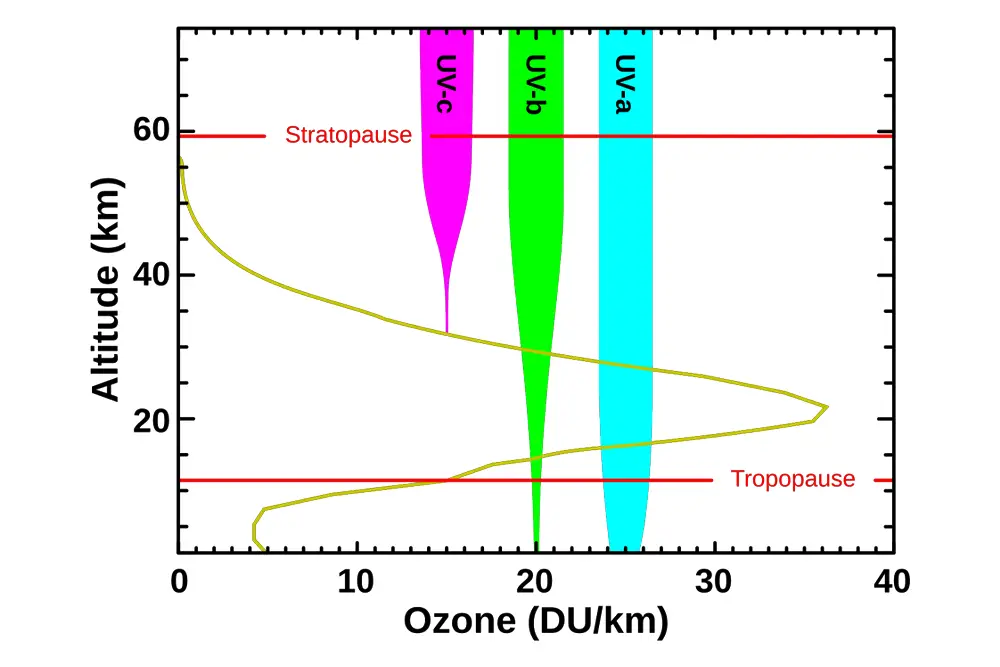
One of the earliest environmental goals in refrigerant development was protecting the stratospheric ozone layer.
Older CFC and HCFC refrigerants contain chlorine. When sufficiently stable compounds reach the stratosphere and break down, released chlorine can participate in reactions that destroy ozone. The ozone layer is important because it absorbs much of the Sun’s harmful ultraviolet radiation.
According to the EPA’s explanation of ozone-depleting substances, CFCs and HCFCs are recognized ozone-depleting substances, while HFCs have zero ozone depletion potential because they do not contain chlorine.
That made HFCs an important improvement over ozone-depleting refrigerants. For example, R410A does not deplete stratospheric ozone in the way R22 can.
But eliminating ozone depletion solved only one environmental problem. Some HFCs still have a substantial climate impact when released, which is why newer development has increasingly focused on reducing GWP as well.
2. Lower GWP Reduces the Impact of Refrigerant Leaks
Global warming potential compares the heat-trapping effect of a greenhouse gas with the effect of an equal mass of carbon dioxide over a specified period.
A refrigerant with a lower GWP causes less direct climate impact per pound released than a higher-GWP refrigerant. This does not make leakage acceptable, but it reduces the potential consequence when a leak occurs.
The refrigerant transition illustrates the difference between environmental measurements:
- R22 is an HCFC with both ozone-depletion and climate concerns.
- R410A is an HFC blend with zero ODP but a relatively high GWP.
- R32 and R454B have zero ODP and lower GWP than R410A.
- R1234yf is an HFO developed for applications needing a substantially lower-GWP option.
- Carbon dioxide, ammonia, and hydrocarbons can offer very low direct climate impact but introduce different design, pressure, toxicity, or flammability considerations.
These examples are not interchangeable products. Every refrigerant must be used only in equipment designed, listed, and approved for it.
The EPA’s low-GWP commercial-refrigeration guidance explains that many traditional HFCs can have warming effects hundreds or thousands of times greater per pound than carbon dioxide. Moving to lower-GWP alternatives can therefore reduce direct emissions when supported by suitable equipment and safe operating practices.
3. New Refrigerants Are Designed as Part of a Complete System
A refrigerant does not cool a building by itself. It operates inside a system containing a compressor, evaporator, condenser, metering device, piping, fans, controls, sensors, and safety components.
Modern equipment can be engineered around the characteristics of a lower-GWP refrigerant. Manufacturers may optimize:
- Compressor displacement and operating envelope
- Heat-exchanger tube size and circuitry
- Refrigerant charge quantity
- Expansion-device control
- Variable-speed operation
- Leak detection and mitigation
- Airflow and fan efficiency
- Defrost and capacity controls
- Service procedures and access points
This system-level optimization is important because changing only the refrigerant does not guarantee better environmental performance.
A lower-GWP refrigerant placed in incompatible equipment could reduce efficiency, damage components, create unsafe operation, or cause the system to leak. A properly designed system may instead achieve both lower direct refrigerant emissions and lower indirect emissions from electricity consumption.
For more detail on that distinction, see the Freon Shop guide explaining how refrigerant choice affects HVAC energy efficiency.
4. Energy Efficiency Can Matter as Much as the Refrigerant
The direct environmental effect of refrigerant leakage receives considerable attention, but electricity consumption can also account for a large portion of an HVAC or refrigeration system’s lifetime climate impact.
A system that consumes less electricity to deliver the required cooling or heating can reduce indirect emissions, especially where the electrical grid still relies partly on fossil fuels.
However, low GWP and high efficiency describe different characteristics:
- GWP concerns the warming effect of refrigerant released into the atmosphere.
- Efficiency concerns useful cooling or heating delivered per unit of energy.
- Total climate impact considers both direct refrigerant emissions and indirect emissions associated with energy use.
The U.S. Department of Energy’s HVAC research program includes next-generation refrigerants alongside equipment and component technologies intended to reduce energy consumption and operating costs. This reflects the need to improve the complete system rather than evaluating the refrigerant in isolation.
A newer refrigerant is most beneficial when the equipment provides strong efficiency across its actual operating range—not merely under one laboratory condition.
5. Lower Refrigerant Charges Limit Potential Emissions
Another design strategy is reducing the amount of refrigerant needed to produce a given amount of cooling.
Manufacturers may reduce charge through:
- Smaller-diameter heat-exchanger tubing
- More compact heat exchangers
- Optimized refrigerant circuitry
- Microchannel condenser designs
- Shorter refrigerant lines
- Distributed or secondary-loop system configurations
- Improved controls and expansion devices
If two systems have similar leak percentages but one contains less refrigerant, the lower-charge system may release a smaller total mass.
Charge reduction must still respect performance and safety requirements. Too little refrigerant caused by undercharging or leakage is not an environmental design feature. It is a service problem that can reduce capacity, increase runtime, damage equipment, and eventually require additional refrigerant.
6. Modern Refrigerants May Require New Safety Measures
Some lower-GWP refrigerants used in newer air-conditioning equipment are classified as A2L, indicating lower toxicity and lower flammability. R32 and R454B are common examples.
“Lower flammability” does not mean nonflammable. Equipment using an A2L refrigerant may incorporate refrigerant-charge limits, airflow requirements, leak-detection components, mitigation controls, specific electrical construction, labeling, and revised installation procedures.
UL Solutions’ explanation of low-GWP refrigerant requirements describes safety strategies such as limiting refrigerant charge or detecting a leak and ventilating the space to keep refrigerant concentration below the applicable flammability limit.
Consequently, an A2L refrigerant must not be placed into older equipment merely because its GWP is lower. Technicians need compatible tools, applicable training, and the manufacturer’s installation and service instructions.
Other very-low-GWP options have their own considerations:
- Carbon dioxide systems can operate at high pressures.
- Ammonia requires careful toxicity management.
- Hydrocarbons require strict flammable-refrigerant charge and ignition-control measures.
- HFO and HFO-blend applications may have equipment-specific material, lubricant, charging, and safety requirements.
An environmentally preferable choice must reduce risk overall—not exchange a climate benefit for an unmanaged installation hazard.
7. Leak Prevention Still Matters with Low-GWP Refrigerants
Lower GWP reduces the climate effect per pound released, but the best release is still the one that never occurs.
Good refrigerant management includes:
- Locating and repairing leaks instead of repeatedly adding refrigerant
- Using proper joining and brazing practices
- Protecting piping from vibration and abrasion
- Charging the equipment accurately
- Checking valves, caps, seals, and service ports
- Maintaining condensers and evaporators
- Recording refrigerant additions and removals
- Recovering refrigerant before opening or disposing of equipment
Leak prevention also protects equipment performance. A system that loses charge may run longer, cool poorly, develop abnormal compressor temperatures, or eventually fail.
That is why the environmental performance of a refrigerant depends partly on technicians, installation quality, preventive maintenance, and equipment owners—not only on the chemical manufacturer.
8. Recovery and Reclamation Create a More Circular Refrigerant Supply
Refrigerant should not be treated as a disposable consumable.
When equipment is serviced or retired, refrigerant can be recovered into an external container rather than released. Depending on its condition and intended next use, recovered refrigerant may be recycled for permitted reuse, sent to a certified reclaimer, or properly destroyed.
The EPA’s current refrigerant recovery and reclamation guidance explains that reclaimed refrigerant is reprocessed and verified against the applicable specifications based on AHRI Standard 700.
Reclamation can deliver several environmental advantages:
- It keeps usable refrigerant out of the atmosphere.
- It supports service of existing equipment.
- It can reduce demand for newly produced refrigerant.
- It encourages better separation and identification of recovered material.
- It reduces the incentive to treat refrigerant remaining in old equipment as waste.
Recovery quality is important. Mixed or contaminated refrigerant is more difficult and expensive to process. Contractors should use correctly identified recovery cylinders and avoid combining different refrigerants.
9. U.S. Regulations Are Encouraging Lower-GWP Technologies
The United States is gradually reducing reliance on high-GWP HFCs rather than requiring every existing system to stop operating immediately.
According to the EPA HFC Data Hub, the American Innovation and Manufacturing Act directs the United States to reduce the production and consumption of regulated HFCs by 85% from baseline levels by 2036.
Separate Technology Transitions requirements apply GWP limits or refrigerant restrictions to specified categories of new products and systems. The current EPA sector restrictions table lists a 700 GWP limit affecting many new residential and light-commercial air-conditioning and heat-pump systems beginning with the applicable 2025 manufacturing and import compliance date.
These policies encourage manufacturers to design new equipment around lower-GWP alternatives. They do not establish that one refrigerant can replace another in an existing system.
Existing equipment may still require its specified refrigerant for service. The transition is explained in more detail in How Refrigerant Regulations Are Changing the HVAC Industry in the United States.
How to Evaluate a Refrigerant’s Environmental Impact
Homeowners, facility managers, and contractors should ask more than “What is the GWP?”
A better evaluation considers:
- Does the refrigerant have zero ODP?
- How does its GWP compare with alternatives approved for the application?
- What safety classification applies?
- Was the equipment specifically designed and listed for it?
- How efficient is the complete certified system?
- How much refrigerant does the equipment contain?
- What leak-detection or mitigation features are included?
- Can technicians obtain the correct training and compatible tools?
- Can the refrigerant be recovered and reclaimed effectively?
- How will the equipment be handled at the end of its service life?
This approach avoids the misleading assumption that the lowest-GWP option is automatically best for every application.
Frequently Asked Questions
Are all modern refrigerants environmentally friendly?
No. Modern refrigerants vary widely in GWP, safety classification, efficiency potential, and application suitability. Some offer major improvements over older fluids, while others solve one environmental problem but retain another.
Is zero ODP the same as zero GWP?
No. ODP measures potential damage to the ozone layer. GWP measures climate warming relative to carbon dioxide. A refrigerant can have zero ODP and still have a high GWP.
Does a low-GWP refrigerant reduce electricity use?
Not automatically. Efficiency depends on the refrigerant and the complete equipment design. Compressor technology, heat exchangers, controls, airflow, installation quality, charge accuracy, and operating conditions all matter.
Are A2L refrigerants safe?
A2L refrigerants can be used safely in equipment designed, listed, installed, and serviced for them. Their lower-flammability classification requires specific charge limits, construction, ventilation, detection, mitigation, or service practices depending on the application.
Can R32 or R454B replace R410A in an existing air conditioner?
Not as a routine field substitution. The refrigerants have different properties and safety requirements. Use only the refrigerant specified or explicitly approved by the equipment manufacturer.
Is reclaimed refrigerant environmentally friendly?
Reclamation can reduce waste and demand for newly produced material while supporting existing equipment. Its benefit still depends on proper recovery, separation, processing, testing, transportation, and leak prevention.
Does an old air conditioner need to be replaced immediately?
Not solely because it uses an older refrigerant. Consider equipment condition, efficiency, leak history, repair costs, component availability, refrigerant availability, and the environmental impact of manufacturing a replacement system.
What is the most environmentally friendly refrigerant?
There is no universal answer. The best option depends on the application, equipment design, climate, safety requirements, energy efficiency, refrigerant charge, leakage, service infrastructure, and end-of-life management.
Final Takeaway
Modern refrigerants are becoming more environmentally friendly through zero ozone depletion potential, lower global warming potential, reduced refrigerant charges, improved equipment efficiency, better leak management, and greater recovery and reclamation.
The refrigerant itself is only part of the result. A low-GWP fluid in poorly designed, inefficient, or leaking equipment may deliver fewer environmental benefits than expected. Likewise, a very-low-GWP refrigerant can create unacceptable risk if used in equipment that was not designed for its pressure, flammability, or toxicity characteristics.
The strongest environmental outcome comes from combining the right refrigerant with purpose-built equipment, accurate installation, efficient operation, preventive maintenance, responsible recovery, and proper end-of-life handling.