
Refrigerant mistakes during AC repairs usually begin when a technician treats refrigerant charge as the first diagnosis instead of the final result of a complete system evaluation.
Low airflow, a restricted metering device, incorrect temperature measurements, dirty coils, noncondensable gases, and compressor problems can imitate an undercharged or overcharged system. Adding or removing refrigerant before checking these conditions may turn one fault into several.
Other costly mistakes include mixing refrigerants, using the wrong pressure-temperature data, failing to weigh the charge, skipping a proper evacuation, contaminating recovered refrigerant, and servicing R-32 or R-454B equipment without appropriate A2L procedures and tools.
Quick Summary of Common Refrigerant Repair Mistakes
| Common Mistake | Possible Result | Better Practice |
|---|---|---|
| Adding refrigerant based only on pressure | Overcharge, missed airflow fault or repeat call | Measure airflow, temperatures, superheat and subcooling |
| Mixing different refrigerants | Undefined P-T behavior, contamination and poor performance | Recover the old charge and follow an approved procedure |
| Skipping leak diagnosis | Continued refrigerant loss and another system failure | Locate and address the cause before final charging |
| Judging evacuation by a compound gauge | Moisture, air or a hidden leak remains in the system | Use a calibrated micron gauge and decay test |
| Using the wrong blend-charging method | Fractionation and altered refrigerant composition | Follow refrigerant and equipment manufacturer instructions |
| Using nonapproved tools on an A2L system | Ignition risk, cross-contamination or incorrect service | Use equipment rated for the specific refrigerant and task |
Source note: The diagnostic principles in this table are supported by the U.S. Department of Energy’s AC diagnostic guideline, the EPA’s stationary-equipment service requirements, and refrigerant manufacturer instructions. Exact service procedures must come from the equipment manufacturer.
Mistake 1: Adding Refrigerant Before Completing the Diagnosis
One of the most common mistakes is seeing low suction pressure and immediately assuming the AC system needs refrigerant.
Low suction pressure can also be caused by:
- Restricted return or supply airflow
- A dirty filter or evaporator coil
- A blower-speed problem
- Low indoor heat load
- A restricted liquid line or filter drier
- An underfeeding expansion valve
- A kinked refrigerant line
- Incorrect test conditions
High discharge pressure does not automatically prove overcharging either. A dirty condenser, failed fan, recirculating hot air, noncondensable gas, liquid-line restriction, or high outdoor temperature may create a similar reading.
The Department of Energy’s diagnostic guidance explains that airflow should be evaluated and both superheat and subcooling should be measured for a complete refrigerant diagnosis. Other system defects can otherwise create false indications of an incorrect charge.
A technician should stabilize the equipment under acceptable test conditions, verify airflow, measure line temperatures, calculate saturation temperatures, and compare the results with the manufacturer’s charging data.
Mistake 2: Using the Wrong Refrigerant
The equipment nameplate—not the service-port size, cylinder color, operating pressure, or technician’s memory—must identify the refrigerant.
Refrigerants with similar pressure ranges are not necessarily interchangeable. R-410A, R-32, and R-454B differ in composition, safety classification, mass-flow requirements, lubricant considerations, charging instructions, and equipment requirements.
Connecting the wrong cylinder can contaminate the system, recovery machine, hoses, manifold and recovery container. It may also leave the next technician with pressure readings that no longer match any recognized P-T chart.
Before opening a cylinder, verify:
- The complete refrigerant designation on the equipment nameplate.
- The cylinder label and product designation.
- The manufacturer’s installation or retrofit instructions.
- The refrigerant setting selected on digital instruments.
- The recovery cylinder’s existing contents and labeling.
Never identify refrigerant solely by pressure. Multiple refrigerants can have similar static pressures at a particular temperature.
Mistake 3: Mixing Refrigerants or “Topping Off” with a Substitute
Adding a replacement refrigerant on top of an existing charge does not create an approved retrofit. It creates an uncontrolled mixture.
According to Arkema’s refrigerant technical guidance, field mixing is unacceptable because the resulting mixture can have uncertain performance, safety and pressure-temperature characteristics. Mixed refrigerant may also be difficult or impossible to reclaim economically.
A proper retrofit—when one is approved for the equipment—may require:
- Complete recovery of the original refrigerant
- Verification of compressor and component compatibility
- Lubricant evaluation or replacement
- Filter-drier replacement
- Seal or expansion-device changes
- System evacuation
- Charging by weight
- New labels documenting the conversion
- Operating adjustments based on manufacturer data
No single retrofit refrigerant is appropriate for every R-22 or legacy system. The equipment manufacturer and refrigerant manufacturer must support the specific application.
Mistake 4: Ignoring Airflow Before Adjusting the Charge
Refrigerant performance depends on heat transfer. If indoor airflow is too low, the evaporator cannot receive the heat load expected by the system design.
That can reduce evaporator pressure, increase superheat under some fault conditions, create coil icing and make the system appear undercharged. Adding refrigerant does not correct the airflow problem and may leave the unit overcharged once normal airflow is restored.
Before adjusting refrigerant, inspect or measure:
- Filter condition and installation
- Evaporator-coil cleanliness
- Blower wheel condition
- Blower speed or programmed airflow
- Supply and return restrictions
- Closed registers or dampers
- Zoning-system operation
- Indoor dry-bulb and wet-bulb temperatures
The same principle applies outdoors. A blocked condenser coil or weak condenser fan can elevate condensing pressure and mislead a technician into removing refrigerant from a correctly charged system.
Mistake 5: Repeatedly Adding Refrigerant Without Finding the Leak
Refrigerant is not consumed like fuel. If a sealed AC system has lost a meaningful amount of refrigerant, there is usually a leak, an earlier service error, or an incomplete initial charge.
Simply adding refrigerant may restore cooling temporarily, but it does not correct the cause. The system can lose capacity again, and continued low-charge operation may contribute to overheating, inadequate compressor cooling or poor oil return.
A professional repair should determine whether the system is actually undercharged, investigate the source of the loss, repair the leak when technically and economically appropriate, verify the repair, evacuate the opened circuit and restore the correct charge.
Technicians must also follow applicable federal requirements. The EPA states that Section 608 certification is required for technicians who attach or detach gauges, add or remove refrigerant, or otherwise perform service that could release regulated refrigerant.
Mistake 6: Recovering Refrigerant Improperly
Opening a system without completing the required recovery process can release refrigerant, contaminate the work area and violate federal service-practice requirements.
The EPA’s stationary refrigeration service rules require applicable air-conditioning and refrigeration equipment to be evacuated to established levels before it is opened for service. Recovery equipment must be used according to its manufacturer’s instructions.
Common recovery mistakes include:
- Using a recovery cylinder with unknown contents
- Combining different refrigerants in one cylinder
- Failing to label recovered material
- Overfilling a recovery cylinder
- Allowing liquid refrigerant to enter equipment improperly
- Using hoses or machines incompatible with the refrigerant
- Failing to account for refrigerant remaining in hoses
- Treating recovered refrigerant as new refrigerant
Recovered refrigerant may be returned to the same owner’s equipment under applicable EPA provisions. If it changes ownership, EPA rules generally require reclamation by an EPA-certified reclaimer before resale.
Mistake 7: Performing an Incomplete Evacuation
Pulling the compound gauge close to 29 inches of mercury does not prove that the system is dry, tight or deeply evacuated.
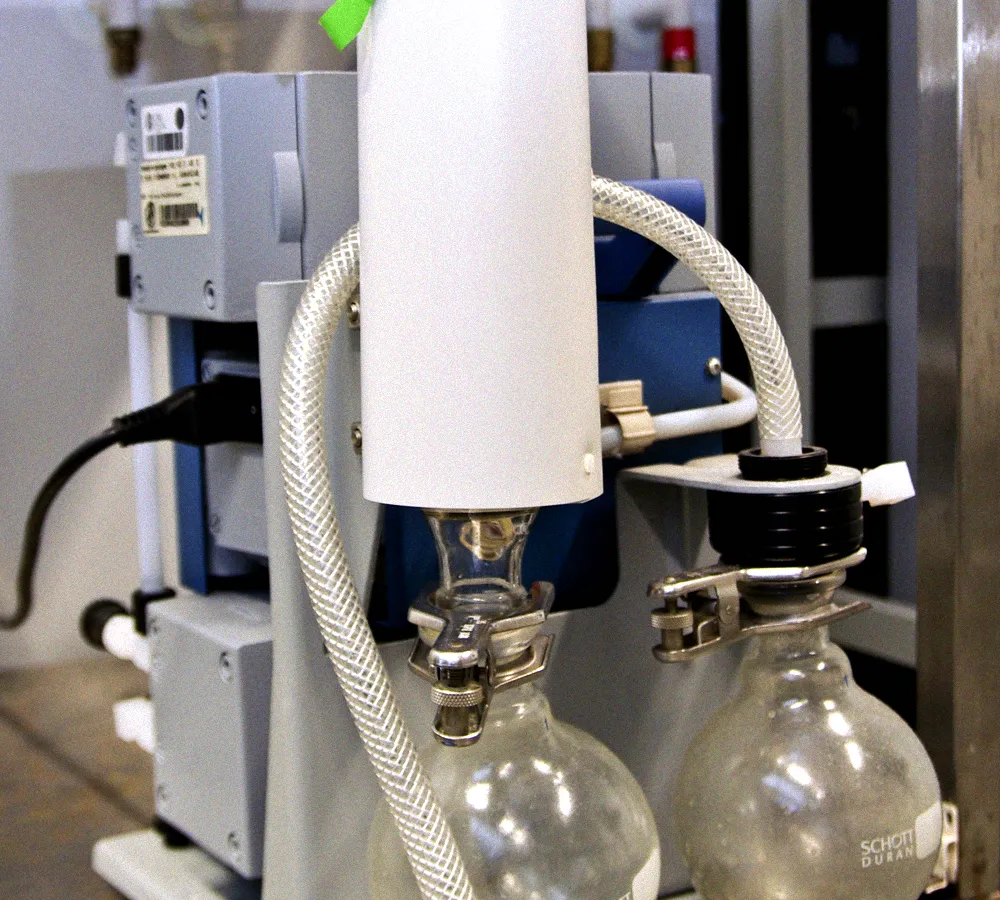
A compound gauge is not precise enough to evaluate a deep vacuum. A technician needs an appropriate micron gauge placed where it can measure the system rather than merely the vacuum pump.
An incomplete evacuation can leave:
- Air and noncondensable gases
- Water vapor
- Moisture trapped in oil or internal materials
- Evidence of an unrepaired leak
- Contamination that promotes acid formation
- Conditions that interfere with the metering device
The DOE guideline identifies a maintained vacuum pump and micron pressure gauge as essential diagnostic equipment. It also warns that contaminated vacuum-pump oil can prevent the pump from reaching the vacuum needed to remove noncondensable gases.
Equipment-specific requirements still control. For example, a current Daikin R-32 installation manual requires completion of the airtight test and vacuum drying before additional refrigerant is charged.
Mistake 8: Charging by Pressure Instead of Weight and OEM Data
Pressure is a diagnostic measurement, not a universal quantity indicator.
The refrigerant charge may need to account for factory charge, indoor-coil combination, line-set diameter, line length and installed accessories. Guessing by suction pressure can produce an incorrect result even when the pressure initially appears reasonable.
Better practice includes:
- Checking the equipment charging label
- Confirming the metering-device type
- Weighing refrigerant added or removed
- Accounting for the approved line-set adjustment
- Measuring superheat or subcooling as specified
- Using the correct refrigerant P-T data
- Allowing the system to stabilize before final readings
- Recording the completed measurements
A system with a fixed orifice commonly relies on a target-superheat procedure. A system with a thermostatic expansion valve commonly relies on target subcooling. However, the equipment manufacturer’s instructions—not a generic rule—determine the final method and target.
Mistake 9: Charging a Refrigerant Blend Incorrectly
Many modern refrigerants are blends. Depending on their composition, removing only vapor from a cylinder can cause the remaining product and the transferred refrigerant to differ from the intended formulation.
Arkema explains that a zeotropic blend can have different liquid and vapor compositions and that separate bubble- and dew-point values may be needed. Its liquid-versus-vapor pressure guidance instructs technicians to use the dew or vapor value for superheat and the bubble or liquid value for subcooling when a chart provides both.
Refrigerant-specific charging instructions also matter. For example, Arkema’s current comparison of R-32 and R-454B states that R-32 can be charged as vapor or liquid, while the R-454B blend should be removed from the cylinder as liquid.
That does not mean liquid should be allowed to flood directly into a running compressor. Technicians must control the charging process according to the equipment and refrigerant manufacturer’s procedure.
Mistake 10: Using Legacy Service Habits on A2L Systems
R-32 and R-454B are classified as A2L refrigerants. Although they are described as mildly flammable, that classification still requires appropriate equipment, training and work practices.
A technician should not assume that every recovery machine, vacuum pump, detector, fan or electrical tool used for an R-410A system is suitable for an A2L system.
Copeland’s A2L servicing guidance emphasizes using tools, leak detection, replacement parts and components approved for the relevant A2L application. It also warns that R-410A, R-32 and R-454B are not interchangeable.
A2L service preparation may include:
- Confirming the nameplate refrigerant
- Removing or controlling potential ignition sources
- Providing ventilation as required
- Using a detector suitable for the specific refrigerant
- Using compatible recovery equipment
- Following equipment-specific mitigation procedures
- Protecting refrigerant detection sensors
- Using replacement components approved for the unit
- Following applicable codes and manufacturer instructions
The equipment manual takes priority over a technician’s experience with older A1 refrigerants.
Mistake 11: Failing to Document the Final Repair
A service ticket that says only “added refrigerant” provides little value during the next visit.
A useful refrigerant service record should include:
- Equipment model and serial number
- Nameplate refrigerant
- Amount recovered
- Amount added
- Indoor and outdoor conditions
- Suction and liquid-line pressures
- Suction and liquid-line temperatures
- Superheat and subcooling
- Airflow or static-pressure findings
- Leak-test result
- Evacuation result
- Components replaced
- Final operating condition
Good documentation protects the customer and helps the next technician determine whether the system has a recurring leak, changing airflow problem or previous charging error.
A Better AC Refrigerant Repair Workflow
A disciplined service process reduces guesswork:
- Confirm the complaint and review previous repairs.
- Identify the exact refrigerant and equipment configuration.
- Complete electrical and visual inspections.
- Verify indoor and outdoor airflow.
- Measure operating conditions and allow the system to stabilize.
- Record pressures and line temperatures.
- Calculate superheat and subcooling using the correct P-T data.
- Diagnose restrictions, airflow faults, noncondensables and component failures before changing charge.
- Recover refrigerant properly when the circuit must be opened.
- Repair leaks and replace required service components.
- Pressure-test and evacuate according to manufacturer instructions.
- Weigh in the prescribed refrigerant.
- Verify final operation and document the results.
Frequently Asked Questions
Can an AC system lose refrigerant without having a leak?
A system may be undercharged because of an incomplete installation or a previous service error. However, a system that was correctly charged and later becomes low usually has a leak or has lost refrigerant during service.
Can a technician diagnose charge from suction pressure alone?
No. Suction pressure must be considered with airflow, indoor and outdoor temperatures, line temperatures, superheat, subcooling, equipment design and manufacturer data.
Is it acceptable to mix two refrigerants with similar pressures?
No. Similar pressure does not establish chemical, lubricant, capacity, safety or equipment compatibility. Mixing creates a refrigerant with undefined service characteristics.
Can R-454B be added to an R-410A system?
No. R-454B is intended for equipment engineered and approved for it. It should not be used to top off an R-410A system.
Why is a micron gauge necessary?
A micron gauge measures deep vacuum much more accurately than a standard compound gauge. It helps technicians evaluate whether air and moisture have been removed and whether the isolated system holds vacuum.
Should every refrigerant charge be adjusted using subcooling?
No. The required method depends on the equipment, metering device and manufacturer instructions. Fixed-orifice systems may use target superheat, while TXV systems commonly use target subcooling.
Does EPA Section 608 certification expire?
According to the EPA, Section 608 technician credentials do not expire. The technician must still use practices and equipment appropriate for the refrigerant and system being serviced.
Can recovered refrigerant be placed in any available recovery cylinder?
No. The cylinder must be suitable for the refrigerant, within its allowable fill limits and correctly identified. Mixing recovered refrigerants can contaminate the entire cylinder.
Final Takeaway
The most expensive refrigerant mistake is assuming that every cooling complaint is a charging problem.
Accurate AC repair begins with equipment identification, airflow verification, complete measurements and manufacturer instructions. Refrigerant should be recovered, evacuated and charged using equipment appropriate for the refrigerant—especially when servicing newer R-32 or R-454B systems.
Before purchasing refrigerant, verify the exact designation on the equipment nameplate and confirm that the technician performing the work has the applicable certification, tools and product knowledge. Freon Shop offers factory-sealed, brand-new refrigerants through its refrigerant collection for customers who have already confirmed the correct product for their application.